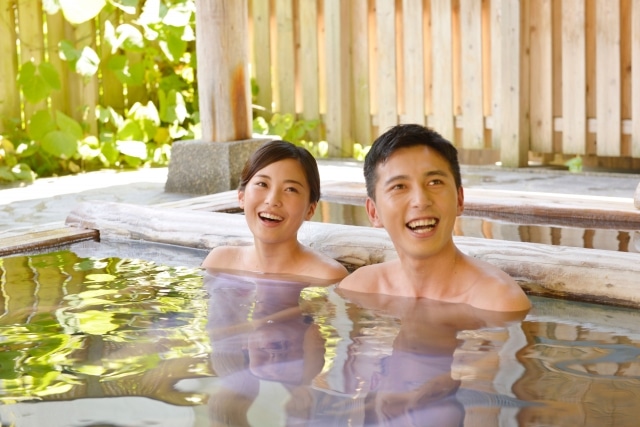
For centuries, the concept of men and women bathing together, known as Konyoku (混浴), was the standard for Japanese bath culture. Records of these traditional mixed-gender onsens date back to the 9th century, with many scholars believing the practice existed long before written history.
The turning point for this communal tradition came during the Meiji Restoration in 1868. As Japan opened its ports to the West, the government began to view mixed bathing through a critical foreign lens. To align with Western standards of modesty, men’s and women’s baths were forcibly segregated.
Since then, the few remaining Konyoku have evolved to survive. While ancient rules strictly forbade towels in the water (to keep the water pure), modern mixed onsens often provide women with yuami-gi (bathing dresses) or towels to protect their modesty, while men often still bathe fully undressed.
Today, finding an authentic mixed-gender onsen is a challenge, with major cities like Tokyo enforcing strict bans. Keita Oguro, a veteran onsen photographer, has tracked the stark decline of these facilities:
- 1990s – 2010s: A 40% decline in mixed facilities.
- 2013: Fewer than 700 remained nationwide.
- 2016: The number dropped to fewer than 500.
With numbers dwindling every year, we have to ask: Why are mixed-gender onsens disappearing at such a rapid pace?
Table of contents
- Why They Are Becoming Extinct
- The Turning Point? Bathing Suit Revolution
- 7 Rare Mixed Gender Onsens That Still Exist
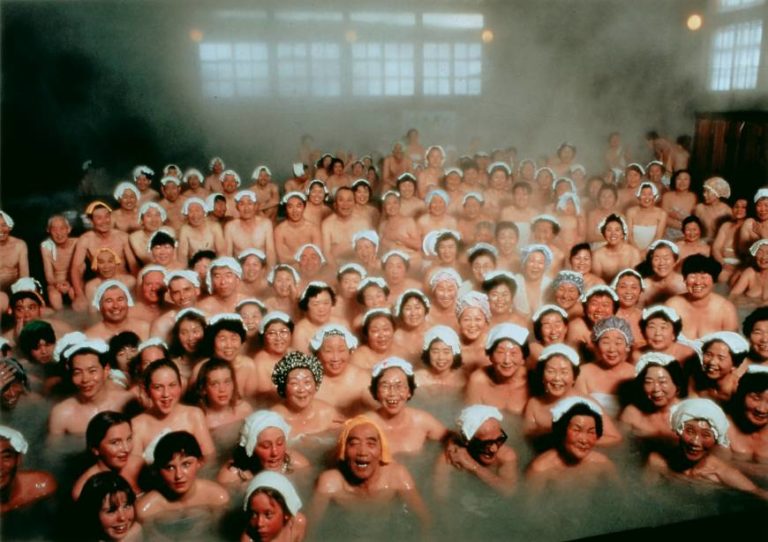
- 1. Sukayu Onsen (Aomori): The 1,000-Person Bath
- 2. Takaragawa Onsen (Gunma): Riverside Nature
- 3. Spa World (Osaka): The Onsen Theme Park
- 4. Hirauchi Kaichu Onsen (Kagoshima): The Ocean Bath
- 5. Beppu Hoyoland (Oita): The Mud Bath
- 6. Tsuru-no-Yu (Akita): The Milky Secluded Bath
- 7. Hoshi Onsen Chojukan (Gunma): Total Tradition
- Modern Alternative: Mixed Bathing Without the Crowds
Why They Are Becoming Extinct
The decline of konyoku (mixed-gender baths) isn’t random; it is the result of shifting cultural tides and modern etiquette challenges. Here are the two primary factors driving mixed gender onsens to the brink of extinction.
1. Western Influence & The Meiji Restoration
When Japan ended its isolation and eased foreign restrictions in the mid-19th century (the Meiji Restoration), Western diplomats and visitors were often aghast at the local bathing culture. To the Victorian sensibilities of the West, mixed-gender onsens were categorised as “shameless” or “promiscuous.”
This cultural clash sparked a political controversy. While the West was still debating the morality of mixed sea bathing even with swimsuits, the Japanese tradition of communal nudity was deemed “uncivilised” by foreign standards.
Anxious to appear modern and “Westernised,” the Japanese government bowed to pressure. Public mixed bathhouses were prohibited in Tokyo, a ban that soon spread to other major cities, marking the beginning of the end for the traditional konyoku.
2. The “Wani” Problem (Bad Manners)
Beyond politics, a prevalent issue driving mixed baths out of business lies in the deteriorating manners of bathers. This phenomenon is known in Japan as the “Wani” (Crocodile) problem.
What is a Wani?
Wani refers to bathers (usually men) who lurk in the water for hours, waiting for a glimpse of bare skin. Like crocodiles, these unwelcome nuisances linger by the entrances or submerge themselves up to their noses, staring at female patrons.
This predatory behaviour has made many women feel unsafe, leading to a sharp decline in female patronage. Without a balanced mix of guests, many establishments have been forced to either segregate their baths or close down entirely.
The Turning Point? Bathing Suit Revolution
To combat the “Wani” problem and prevent total extinction, local communities and the government are fighting back. While traditionalists once insisted on total nudity, the survival of the mixed-gender onsen (konyoku) now depends on adapting to modern comfort levels.
Leading this charge is the historic, 300-year-old Sukayu Onsen in Aomori Prefecture.
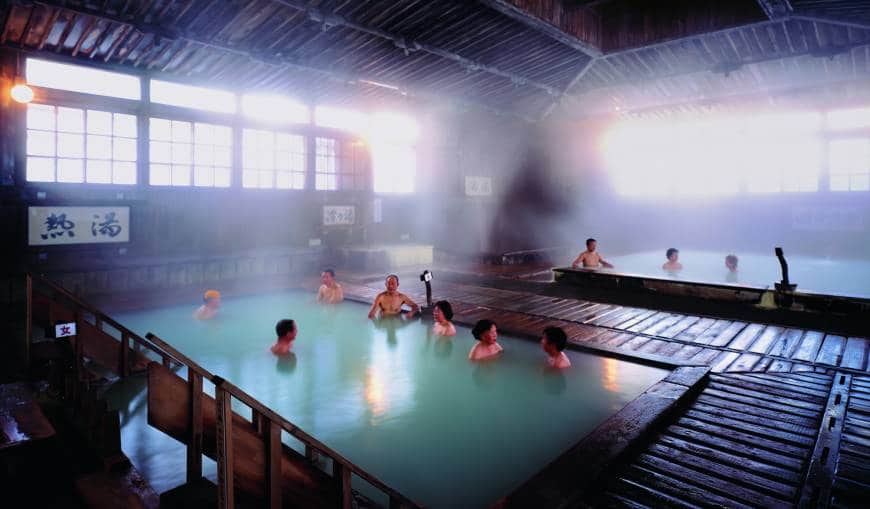
Famous for its massive Sen-nin-buro (thousand-person bath), this iconic bathhouse faced a crisis amid growing complaints of ogling. Despite ranking among the top onsens in Japan, the uncomfortable environment was driving female patrons away.
In response, Sukayu Onsen began shifting away from the strict tradition of nudity. According to a report by The Asahi Shimbun, the facility began experimenting with “bathing garment” requirements to address harassment and attract younger generations.
In these trials, men wear knee-length pants, and women wear yuami-gi (bathing dresses). The result? A surge in female patrons who report feeling safer.
As one bather noted, “I don’t have to worry about being ogled.”
With the number of mixed-gender onsens dropping from 1,200 in 1993 to roughly 500 in 2021, these modern adjustments (supported by the Ministry of the Environment) may be the only way to save this cultural heritage from extinction.
7 Rare Mixed Gender Onsens That Still Exist
| Onsen Name | Clothing Policy | Scenery / Setting | Unique Highlight |
|---|---|---|---|
| Sukayu Onsen (Aomori) | Yuami-gi (Dress) Required for women | Historic Indoor (Rustic Wood) | 1,000-Person Bath (Sen-nin-buro) |
| Takaragawa Onsen (Gunma) | Bathing Suits Rentals provided | Outdoor Nature (Mountain Stream) | Riverside Views Famous for autumn leaves |
| Spa World (Osaka) | Swimsuits Required | Indoor Resort (Theme Park Style) | Family Friendly Water slides & themed zones |
| Hirauchi Kaichu (Kagoshima) | Towels Allowed (Strictly no swimsuits) | Wild Ocean (Sea Level) | Accessible Only at Low Tide Raw nature experience |
| Beppu Hoyoland (Oita) | Mud Coverage (Nature’s swimsuit) | Outdoor (Open Pit) | Rare Mud Bath Thick mud offers privacy |
| Tsuru-no-Yu (Akita) | Towels Allowed (Milky water hides body) | Historic Village (Secluded Mountains) | Milky White Water Best for snowy winters |
| Hoshi Onsen (Gunma) | Strict Nudity (No swimsuits allowed) | Meiji-Era Hall (National Property) | Crystal Clear Water Traditional floor bubbling |
1. Sukayu Onsen (Aomori): The 1,000-Person Bath
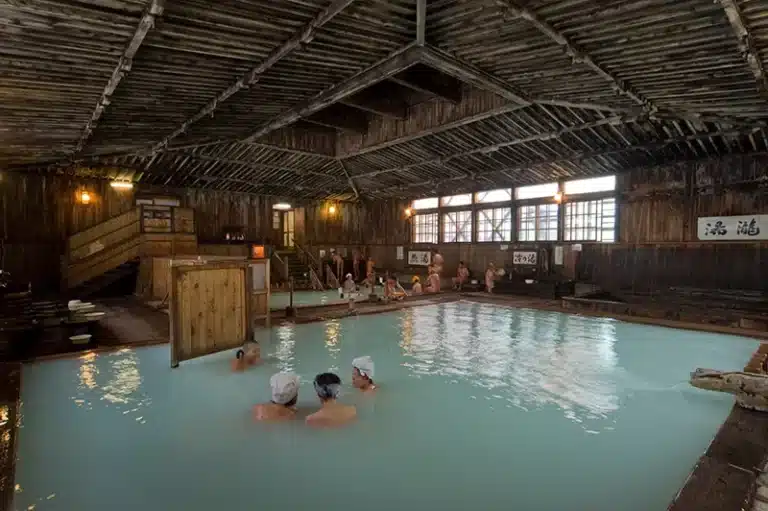
Hidden deep in the Hakkoda Mountains, Sukayu is famous for its massive Sen-nin-buro (Thousand-Person Bath). This historic indoor bath is built entirely of beech wood, creating a nostalgic, steam-filled atmosphere that feels like stepping back 300 years. The water is highly acidic and milky, known for its healing properties.
- Clothing Policy: Semi-Strict. Men typically bathe nude, but to combat the “wani” problem, women are now required to wear a yuami-gi (bathing dress), which can be purchased at the shop.
- Women-Only Hours: The main mixed bath is reserved exclusively for women from 8:00 AM – 9:00 AM daily.
- Access: Take a JR Bus from Aomori Station (approx. 80 mins) or Shin-Aomori Station.
- Cost: Approx. ¥1,000 for day-use entry.
2. Takaragawa Onsen (Gunma): Riverside Nature
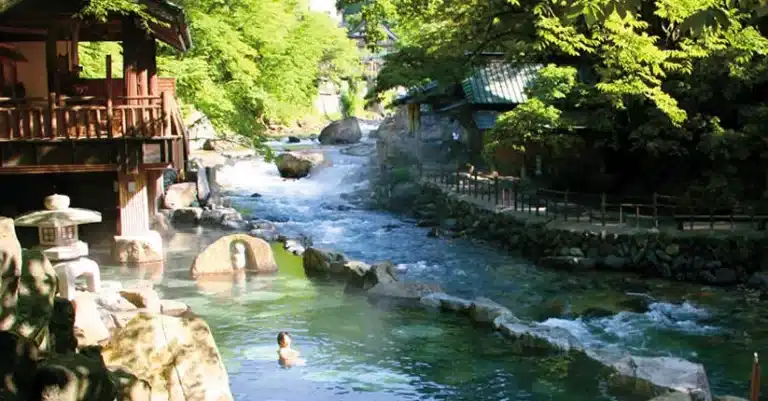
Often voted Japan’s best hot spring for foreigners, Takaragawa offers four massive outdoor baths (rotenburo) that stretch alongside a rushing mountain stream. The scenery is stunning year-round, but especially during autumn foliage and winter snow. It is one of the most beginner-friendly mixed onsens due to its modern approach.
- Clothing Policy: Bathing Wear Required. Nudity is no longer allowed. All guests must wear a special bathing garment provided by the facility (included in the entry fee). No personal swimsuits allowed.
- Women-Only Hours: One of the four large outdoor baths, “Maya,” is exclusively for women at all times.
- Access: Take the Shinkansen to Jomo-Kogen Station, then a bus to Minakami Station, followed by a designated shuttle or local bus.
- Cost: Approx. ¥2,000 (includes bathing garment rental).
3. Spa World (Osaka): The Onsen Theme Park
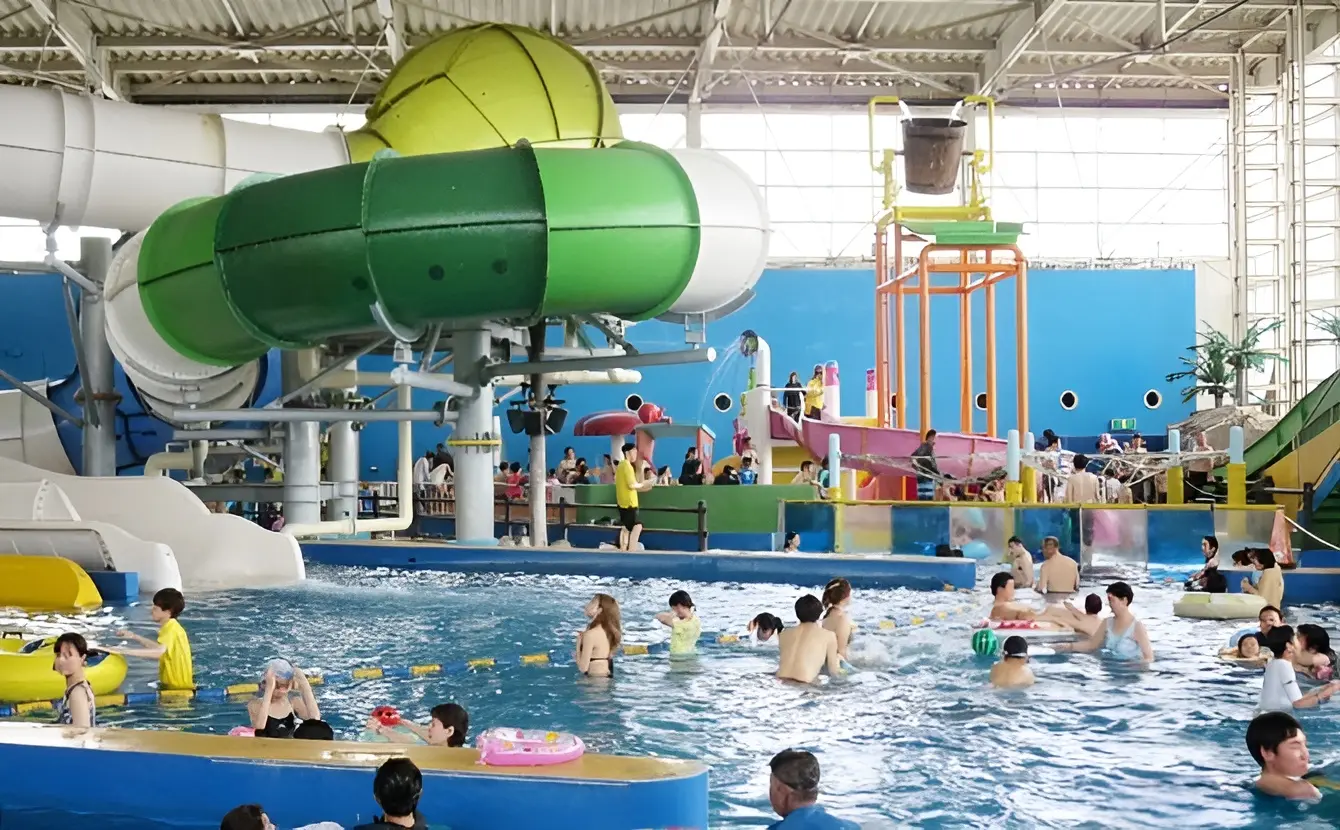
If traditional rustic baths aren’t your style, Spa World in downtown Osaka offers a massive “super sento” experience. It features themed zones (European vs. Asian) and water slides. While the gender-segregated zones are nude, the roof features a large mixed-gender scenic pool (Spapoo) perfect for couples and families.
- Clothing Policy: Swimsuits Required. This is a pool-style environment, so bring your own swimwear.
- Women-Only Hours: None for the mixed zone, as it is a swimsuit area.
- Access: Located immediately outside Dobutsuen-Mae Station (Midosuji & Sakaisuji Lines).
- Cost: Approx. ¥1,500 – ¥3,000 depending on the season and time limit.
4. Hirauchi Kaichu Onsen (Kagoshima): The Ocean Bath
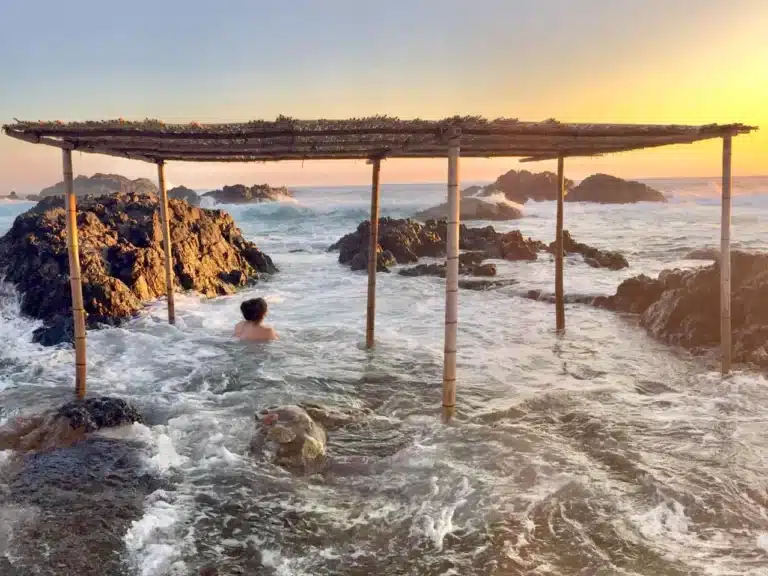
This is a wild, unmanned natural bath located on the southern island of Yakushima. The unique hook? The bath is only accessible for two hours a day during low tide. When the tide comes in, the bath disappears under the ocean waves. It offers zero facilities—just you, the rocks, and the Pacific Ocean.
- Clothing Policy: Towels Allowed. Swimsuits are strictly prohibited to protect the water quality, but you can wrap a towel around yourself.
- Women-Only Hours: None. It is a completely open public space.
- Access: A 30-minute bus ride from Anbo Port to the “Hirauchi Kaichu Onsen” bus stop.
- Cost: ¥200 (honour system—put coins in the collection box).
5. Beppu Hoyoland (Oita): The Mud Bath
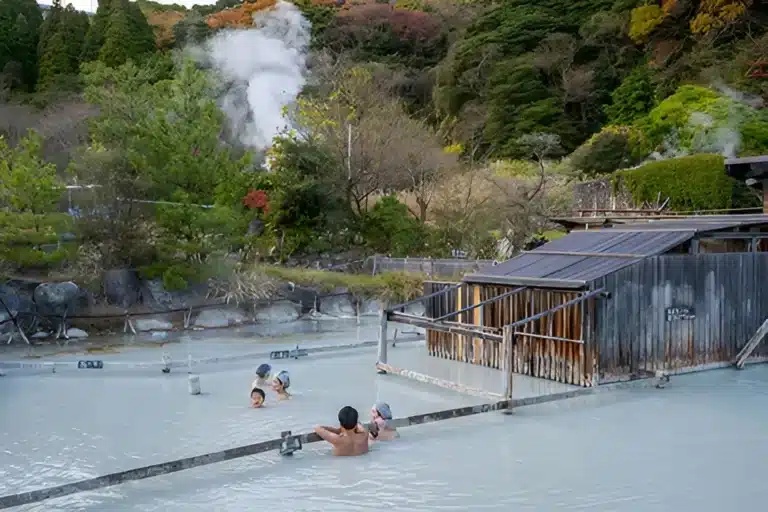
Located in Japan’s onsen capital, this facility is famous for its creamy, mineral-rich mud. Unlike clear water baths, you submerge yourself in thick, grey sludge that is said to be excellent for skin health. The open-air mixed pit is surrounded by bamboo, and the mud’s opacity provides excellent natural cover for shy bathers.
- Clothing Policy: Variable. Nudity is the rule, but the mud covers you instantly. Women enter from a separate indoor bath and can wade into the mixed area, where they are submerged in mud.
- Women-Only Hours: None specific; separate women-only mud pits are available.
- Access: Take a bus from JR Beppu Station towards Myoban Onsen (approx. 25 mins).
- Cost: Approx. ¥1,100.
6. Tsuru-no-Yu (Akita): The Milky Secluded Bath
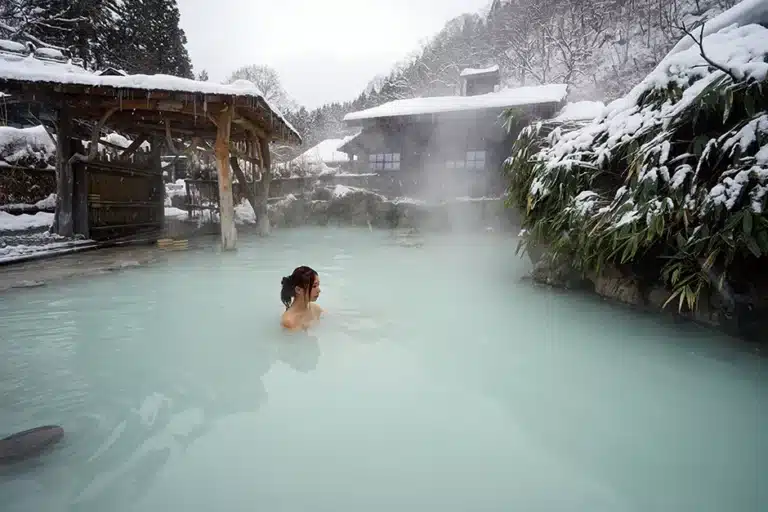
As the oldest ryokan in the Nyuto Onsen village, Tsuru-no-Yu defines the “rustic Japan” aesthetic. The mixed outdoor bath (Konyoku Rotenburo) is famous for its milky-white water, which provides a natural “blind” that obscures bodies below the neck, making it popular with couples. The setting, especially in deep winter snow, is magical.
- Clothing Policy: Towels Allowed. Women can enter via a private “wade-in” path that keeps them hidden until they are submerged. Towels are generally permitted for modesty.
- Women-Only Hours: Generally none in the main mixed pool, but smaller women-only outdoor baths are available.
- Access: Take the Shinkansen to Tazawako Station, then a bus to Nyuto Onsen (transfers often required).
- Cost: Approx. ¥600 for day-trippers.
7. Hoshi Onsen Chojukan (Gunma): Total Tradition
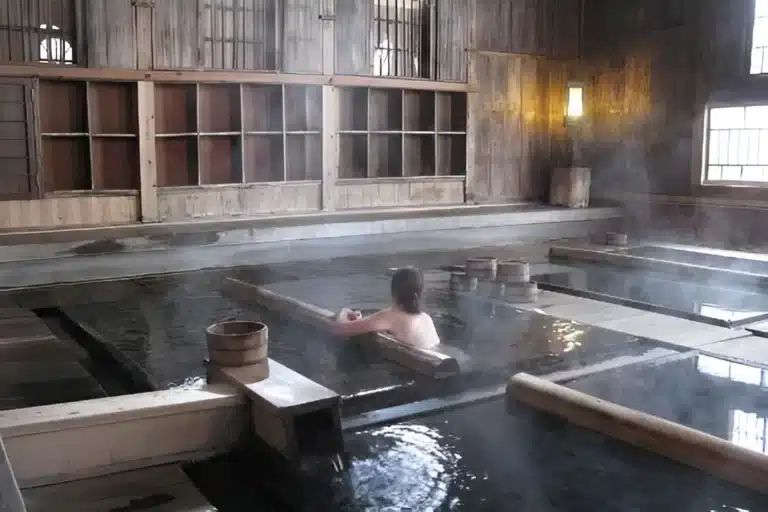
A registered National Tangible Cultural Property, Hoshi Onsen is for the purists. The main bath, Choju-no-Yu, features magnificent Meiji-era architecture with high wooden ceilings. The water bubbles up directly from the pebbles beneath your feet. The water is crystal clear, offering a truly authentic, unhidden experience.
- Clothing Policy: Strict Nudity. No swimsuits and towels are generally not allowed in the water. This is the most “hardcore” traditional experience on the list.
- Women-Only Hours: To accommodate shy guests, the main mixed bath is reserved for women only from 8:00 PM – 10:00 PM (for overnight guests).
- Access: Take the Shinkansen to Jomo-Kogen Station, then a bus bound for Hoshi Onsen (approx. 60 mins).
- Cost: Approx. ¥1,000 for day-use.
Modern Alternative: Mixed Bathing Without the Crowds
While the “total tradition” of places like Hoshi Onsen offers a rare glimpse into the past, we understand that not everyone is comfortable bathing naked with strangers or flying 6 hours to do it.
If you are looking for the intimacy of a mixed-gender bath but prefer modern privacy over public nudity, you don’t need to travel to Japan.
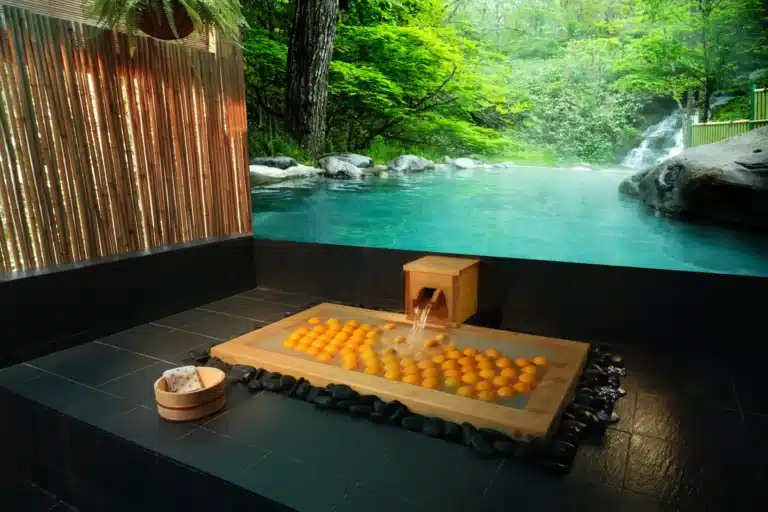
At Ikeda Spa, we keep the spirit of communal bathing alive through our Private Hinoki Onsen Suites. Handcrafted from real Japanese cypress (Hinoki), the same wood used in historic ryokans, our baths release calming mineral oils and soothing scents that replicate the authentic Japanese experience.
The best part? You can enjoy this couple onsen experience with your partner in complete privacy. No “wani,” no awkward stares, and no towels required. It is just you, your partner, and the water’s relaxing warmth.