

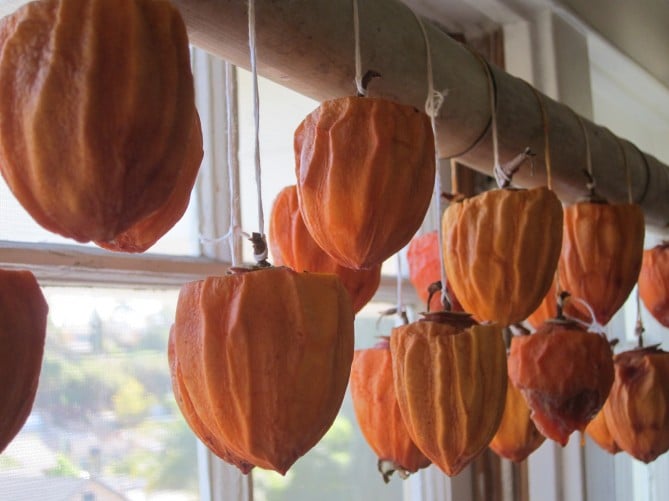
Autumn calls for the harvest of the national fruit of Japan, known as kaki, or persimmons. This bright orange fruit is undoubtedly Japan’s symbol of autumn, as they are sold in supermarkets as soon as it is reaped. Dried persimmons are also hung from the windows as decorations to indicate the fall season.
For the Japanese, the persimmon is far more than a delicious seasonal treat. Its bright orange hue is a symbol of autumn, prosperity, good fortune, and longevity. The trees that grow the fruit are long-lived, and there is an old saying that goes “momo kuri san nen, kaki hachi nen,” which means that peaches and chestnuts take three years to produce fruit while persimmons take eight years. Thus, the persimmon is a fruit that rewards those who are patient, much like the spirit of omotenashi.
桃栗三年柿八年 (momo kuri san-nen kaki hachi-nen)
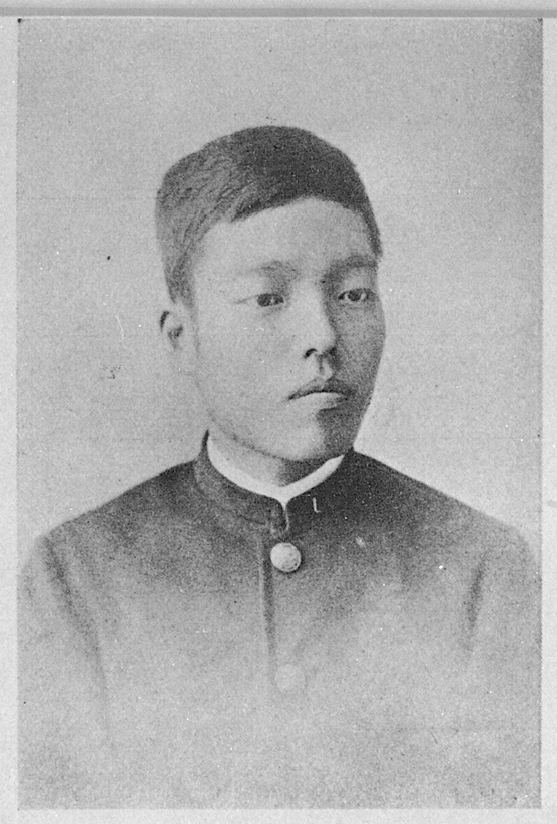
That same reverence for the fruit of the persimmon tree also runs through Japan’s poetry. The fruit appears in many of Japan’s most beloved haiku, including the renowned Masaoka Shiki’s haiku composed at Hōryū-ji temple in Nara prefecture: “Biting into a persimmon, the bell of Hōryū-ji tolls.”
Where Persimmons Grow in Japan
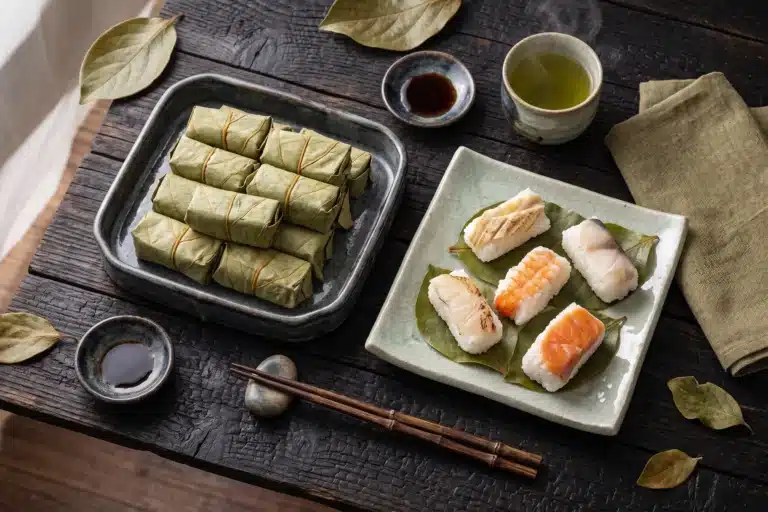
The Japanese countryside is filled with persimmon trees, which have been present there for thousands of years. These trees and their fruits are used for a variety of purposes. Leaves from the persimmon tree are dried to make persimmon leaf tea, while the fruit is used to make the sushi known as kaki-no-ha sushi.
Persimmon wood is used to create furniture and decorative products. Additionally, juice from unripe persimmon fruits can be used as a natural stain for wooden furniture. This juice is also consumed and used for medicinal purposes.
Japan produces more persimmons than any other country in the world. It ranks as the third- or fourth-largest producer of persimmons, behind China and South Korea. Persimmons grow across the country, from Kyushu in the south to Tohoku in the north. Wakayama Prefecture produces about one-fifth of the persimmons grown in Japan. This region has been the top producer of persimmons in Japan for over four decades. Other prefectures that produce persimmons include Nara, Fukuoka, and Gifu. These three prefectures produce their best persimmons during the autumn months. Japan produces about 190,000 metric tons of persimmons annually. Due to the ageing of persimmon orchards and decreasing farmland availability, the annual production of persimmons in Japan has decreased over the last few years. As a result, the best persimmons of the season are more valuable.
Production and prefectural figures: Japan’s Ministry of Agriculture, Forestry and Fisheries (MAFF), via the national statistics portal e-Stat.
Types of Japanese Persimmons
There are over a thousand cultivars of kaki, but they fall into two main families based on their tannin content.
The first family of kaki are the sweet, non-astringent varieties, also known as amagaki. Examples of this family include Fuyu and Jiro kaki, which contain very little tannin even before they are fully ripe. These kaki can be enjoyed while still firm and crisp. They have a mild flavour and are sweet like honey. Most people can enjoy these kaki without encountering any problems.
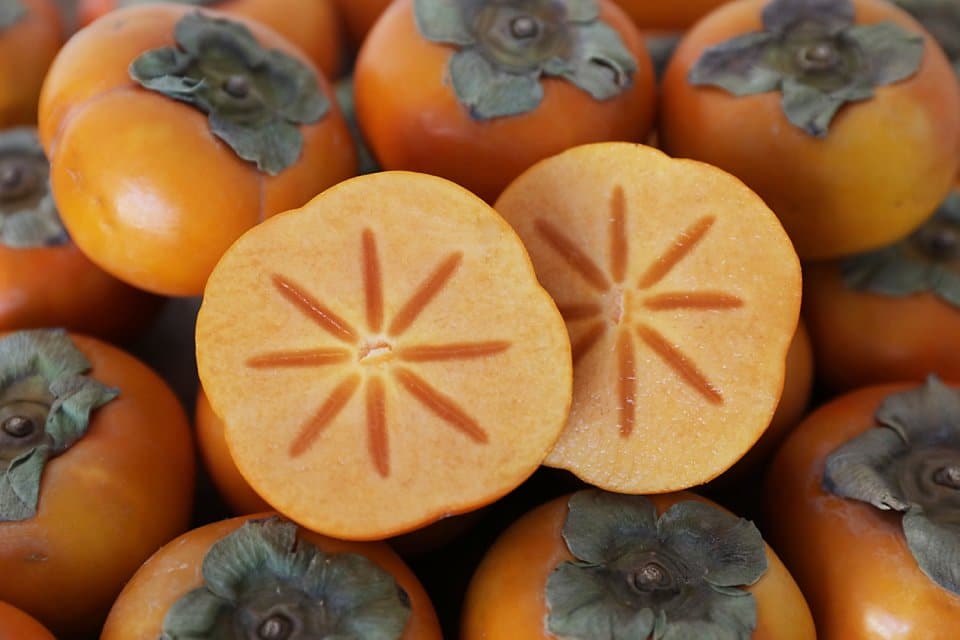
The second main category of kaki is the astringent varieties known as shibugaki. Examples include Hachiya, Hiratanenashi, and Tonewase kaki. If these kaki are eaten before they are ripe, the astringent tannin will create a sensation that counts as astringency in the mouth. However, this astringency can be removed by allowing the kaki to ripen until it is soft, by exposing it to alcohol or carbon dioxide, or by drying it.
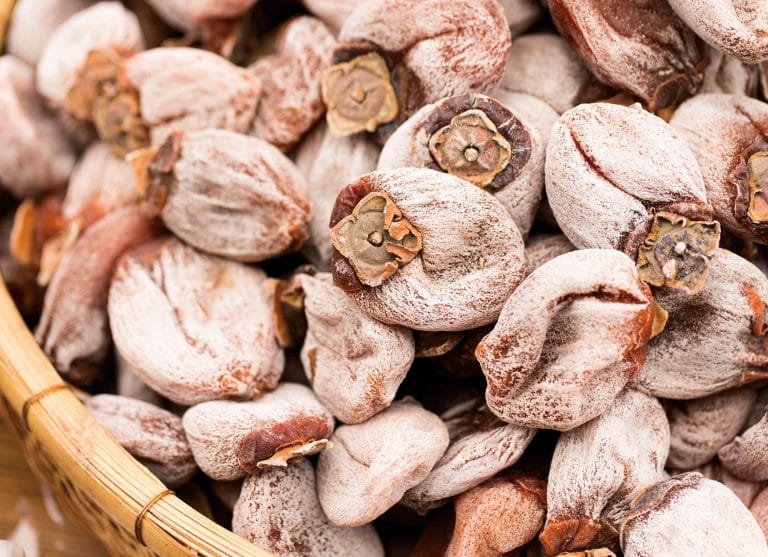
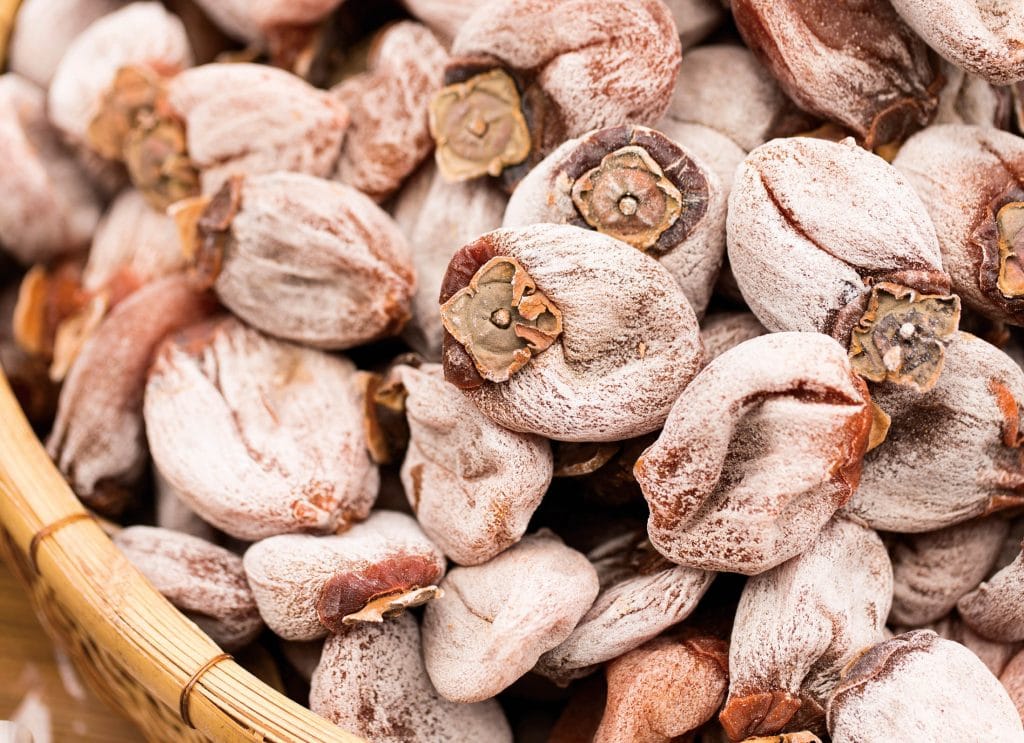
Drying astringent kaki results in a product known as hoshigaki. Many people assume that hoshigaki is a third main variety of kaki, but this is not true. Hoshigaki is the dried form of the astringent kaki varieties, such as Hachiya. To make hoshigaki, the kaki are peeled and hung in the autumn air. They are then massaged for several weeks. Over the coming weeks, the pulp inside the kaki breaks down, and the sugars crystallise on the skin. The resulting dried kaki is chewy and sweet, a favourite treat in autumn.
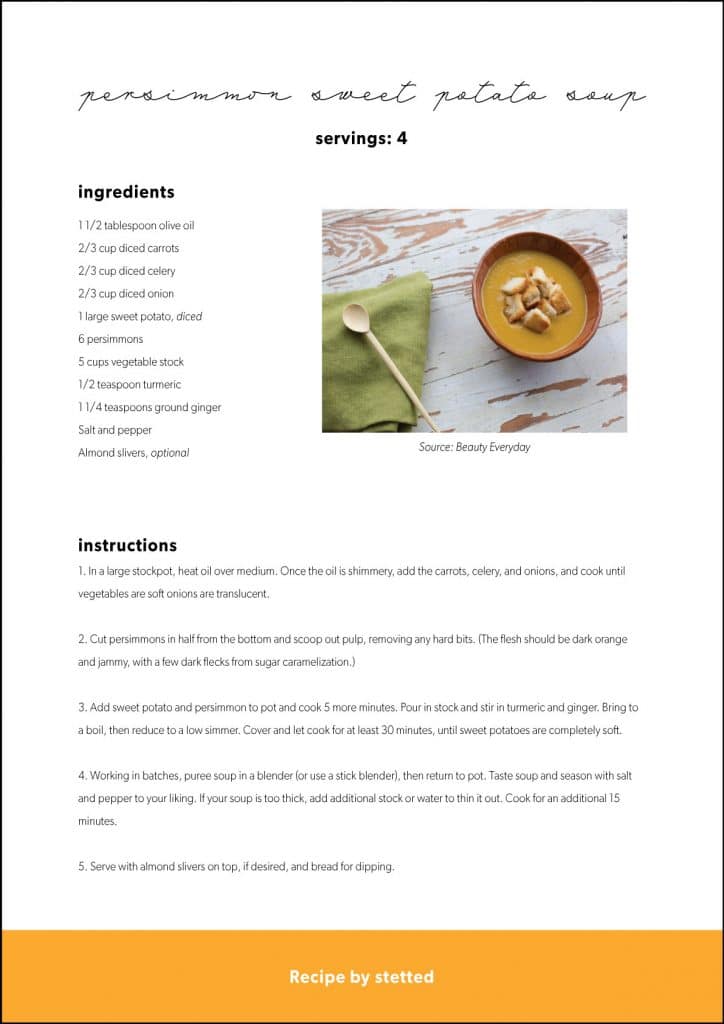
Persimmon Sweet Potato Soup Recipe
What better way to ease into the fall mood than with a good ‘ole bowl of soup? This recipe incorporates two of autumn’s staples: Fuyu persimmons and sweet potatoes.
Soften and Debitter Your Persimmons
If your Fuyu persimmons are hard, you can put them in a paper bag with an apple to soften them. Alternatively, you can pop them in the freezer overnight to let them thaw. The insides will scoop out easily with a spoon.
To remove the bitterness, you can use high-alcohol spirits such as Shōchū or brandy. Wash and dry the fruit, dot the calyxes with alcohol-soaked cotton swabs, and seal the fruit in a plastic bag. Keep them in a cool, dark place for one to two weeks until they are sweet.
FAQ
What is the national fruit of Japan?
The persimmon fruit, known as kaki in Japanese, is the official national fruit of Japan. The country has been cultivating persimmons for centuries. Also, this fruit symbolises autumn, prosperity, and longevity. The fruit is also featured in many aspects of Japanese culture.
What is the difference between Fuyu and Hachiya persimmons?
The Fuyu persimmon variety produces non-astringent fruits that look like tomatoes. These fruits retain their sweetness even before they become soft. The Hachiya persimmon variety produces astringent fruits that look like acorns. These fruits turn bitter if they are eaten before they are ripe. However, they develop their full flavour when they become soft, giving them a jelly-like texture.
How do you ripen or de-bitter astringent persimmons at home?
To ripen astringent persimmons while they are still firm, place the persimmons inside a paper bag with an apple. The apple releases ethylene gas that aids the ripening of the persimmons. Alternatively, you can freeze the persimmons overnight. Afterwards, scoop the fruit out with a spoon. To remove the astringency from the fruit, apply a high-proof spirit like shōchū or brandy to the calyx of the persimmon with a cotton swab. Then place the persimmons in a bag and store them in a cool, dark place for 1 to 2 weeks. The persimmons will become sweet.
Can you eat persimmon skin?
Yes. The skin of the Fuyu persimmons is thin. Therefore, people can eat the skin of these persimmons along with the fruit. However, people often remove the skin of the astringent persimmons, such as the Hachiya variety, along with the fruit. The food is still safe for consumption.
What is hoshigaki?
Hoshigaki is dried persimmon fruit made in Japan. The persimmons that they use to make hoshigaki are the astringent Hachiya persimmons. Before drying the fruit in the autumn, people remove the skin by hand. They then dry the fruit for several weeks. The dried fruits have a chewy texture and a sweet flavour. People often drink green tea along with Hoshigaki.
When are persimmons in season in Japan?
Persimmons are in season between October and December in Japan. People continue to enjoy dried persimmons even into the first days of the new year.
However, if this delicious delicacy is not enough to get you in the autumn mood, what about pampering yourself with our Persimmons Aromatherapy Massage? At Ikeda Spa, you can relax and rejuvenate your senses with this massage combined with the calming scent of persimmons.

Enjoy our Autumn Delight Series by soaking in the Rice Hinoki Onsen for 30 minutes, then relaxing with a 90-minute Persimmons Aromatherapy Massage at a promotional price. Save more than 40% with this autumn treat, leaving you recharged and your skin baby-soft.