

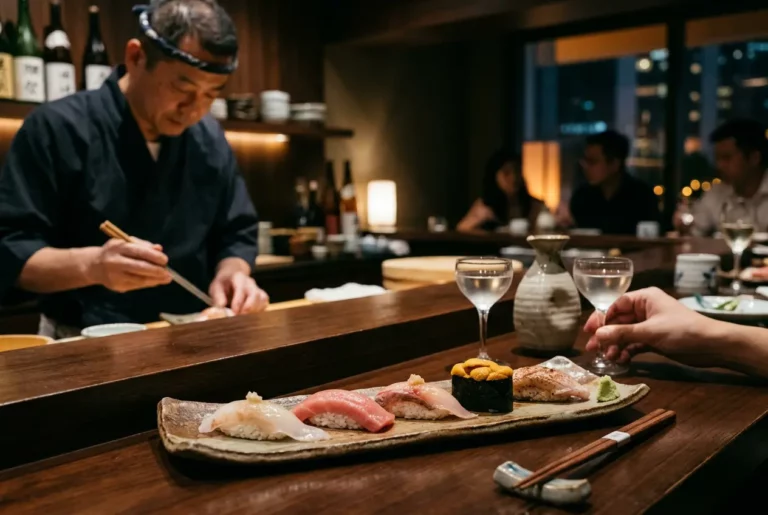
I used to think sushi sake pairing in omakase was mostly instinct. Order a beautiful bottle, sit at the counter, and trust that great sushi sake would naturally lead to a great meal. Then I interviewed Joshua Kalinan Sinnathamby, Singapore’s first Master Sake Sommelier, and he gave me a much better framework for how pairing actually works.

What I loved most about his approach is that it feels expert without feeling intimidating. He does not treat sake like a trophy bottle exercise. He treats it as part of the meal’s rhythm. Once I heard him explain that the goal is harmony between the fish, the rice, and the sake, a lot of things clicked for me.
If you love Japan, travel there often, and enjoy a proper omakase experience as much as I do, this way of thinking makes every course feel more intentional.
Table of contents
- Why Sushi Sake Pairing Often Goes Wrong
- The Expert Rule I Now Follow First: Respect the Rice
- Match Weight, Not Prestige
- The Real Goal at Omakase Is Flow
- How I Think About Sushi Sake Pairing Course by Course
- Complementary vs contrasting pairings
- How I Would Order at Omakase Now
- Premium Sake Can Be Served Warm
- Why Joshua’s Perspective Matters
- FAQ
- Conclusion
Why Sushi Sake Pairing Often Goes Wrong
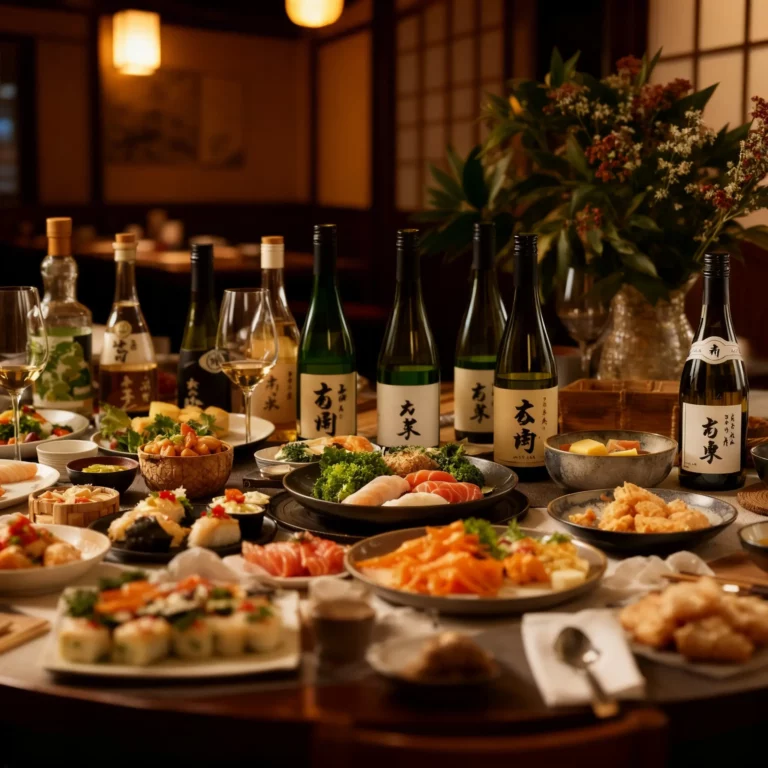
Joshua told me the biggest misconception is assuming the more expensive or more aromatic the sake, the better the pairing. In his view, that is one of the fastest ways to ruin delicate sushi.
Highly aromatic styles can overwhelm subtle fish and distract from the rice. That point stayed with me because I had exactly that experience before. The sake felt impressive, but the sushi felt quieter and less precise after the sip.
His philosophy is simple and sharp. The real goal is harmony between three elements:
- the fish
- the rice
- the sake
If the sake dominates, the pairing has already failed.
That is such a useful reset. At omakase, I am not trying to be impressed by the loudest bottle. I am trying to make the next bite taste clearer, sweeter, and more elegant.
The Expert Rule I Now Follow First: Respect the Rice
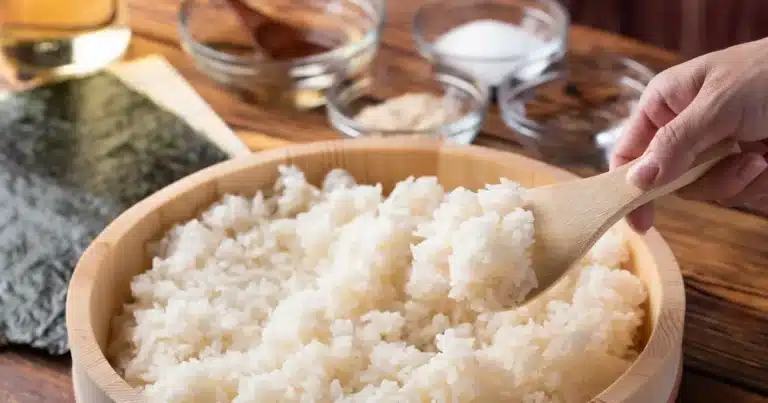
This was probably the most important reminder from Joshua’s interview. Sushi is not just fish. The rice matters just as much.
Sushi rice is seasoned with vinegar, sugar, and salt. That means the sake has to work with acidity and seasoning, not just the topping. If the sake clashes with the rice, the whole pairing feels slightly off, even if the fish and the bottle are both excellent on their own.
Joshua explained that this is why sake with good acidity and umami often performs better with sushi than extremely fragrant styles. The more I think about it, the more obvious it becomes. The finished sushi bite is what matters, not the ingredient list in isolation.
Now, when I think about sushi and sake pairing, I do not ask only what works with tuna or with white fish. I ask what works with this exact bite, seasoned this exact way.
Match Weight, Not Prestige
Joshua’s second golden rule is the one I wish every sake drinker heard earlier. Match weight, not prestige.
His advice is wonderfully practical:
- Delicate fish equals lighter sake
- Fatty fish equals fuller sake
That one idea solves most pairing mistakes. It also helps cut through the temptation to order based on label, price, or reputation. A famous bottle is not automatically the right bottle for the course in front of me.
This is also why sushi sake pairing feels more intuitive once I stop thinking in terms of status. If the fish is lean, clean, and subtle, I want a sake that behaves the same way. If the fish is richer and coats the palate, I need more depth and structure in the glass.
The Real Goal at Omakase Is Flow
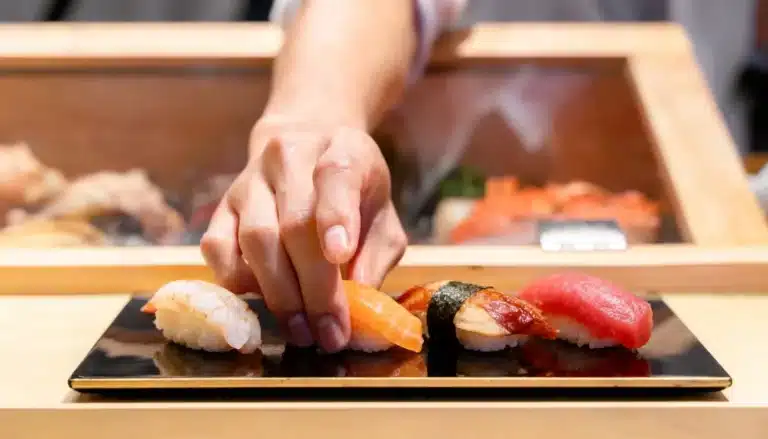
One of Joshua’s best lines was that the goal of pairing is flow, not just flavour matching.
A good pairing should do three things:
- Refresh the palate
- Reset the mouth for the next piece
- Amplify the rice and fish together
That is exactly how the best omakase meals feel to me. Each course should lead naturally into the next. The sake is not there to slow the meal down with heaviness. It is there to keep the experience moving with clarity.
This is also why I have become much more convinced that pairing by the glass makes sense for omakase. One bottle rarely carries a full progression from light sashimi to fatty tuna to richer cooked items. A thoughtful sequence does.
How I Think About Sushi Sake Pairing Course by Course
Appetisers (Zensai)

For appetisers, light sashimi, and delicate opening dishes, Joshua looks for sake that is light, clean, slightly aromatic, and refreshing.
He highlighted styles such as:
- Junmai Ginjo
- Usunigori
- Nama sake
I can immediately see why. Early courses should open the palate, not fill it. These styles bring lift and brightness, which is exactly what I want at the start of omakase.
When the chef is building a meal gently, the sake should follow that same mood.
White Fish (Shiromi)

With shiromi such as hirame, tai, and suzuki, Joshua was very clear that a powerful, rich sake is the wrong move.
For these lean and subtle fish, he looks for:
- light body
- elegant acidity
- moderate aroma
The styles he recommends include Junmai Ginjo and Tanrei Karakuchi sake. He described the right pairing beautifully. The sake should act like a gentle breeze, not a storm.
That image really stayed with me. It captures the restraint that great omakase so often requires. When the fish is whispering, the sake should not be shouting.
Fatty Cuts (Otoro, Yellowtail)

Once the meal moves into richer territory, such as otoro or yellowtail, the strategy changes. Fatty fish coats the palate, and Joshua says the sake needs more body, stronger umami, and slightly higher acidity to handle it well.
This is where he turns to:
- Junmai
- Kimoto
- Yamahai
These styles have the structure to cut through the richness and keep the mouth from feeling oily. I love this stage of a meal because it shows how much sushi sake pairing is really about texture. It is not just flavour on flavour. It is how the drink moves through the weight of the bite.
Sometimes the best pairing is not the one that mirrors the fish. It is the one that brings back freshness.
The Heavy Hitters (Uni & Anago)
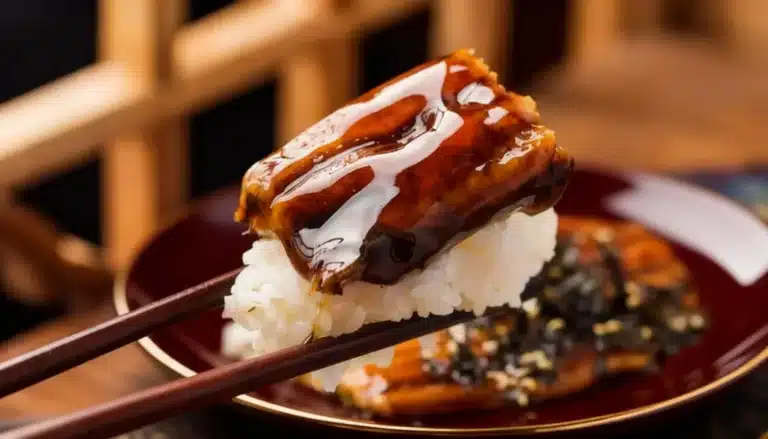
Joshua called uni and anago the heavy hitters, and that feels right. Uni is creamy, sweet, briny, and deeply umami. Anago brings sweetness from tare and a softer, richer depth.
For these courses, he likes:
- Junmai Daiginjo with depth
- Aged sake such as Koshu
- Yamahai Junmai
I found his point about aged sake with eel especially interesting. A slightly aged sake can echo the nutty, caramelised quality of tare in a way that feels seamless and memorable. This is the kind of pairing that makes a course linger in my mind long after dinner ends.
Complementary vs contrasting pairings
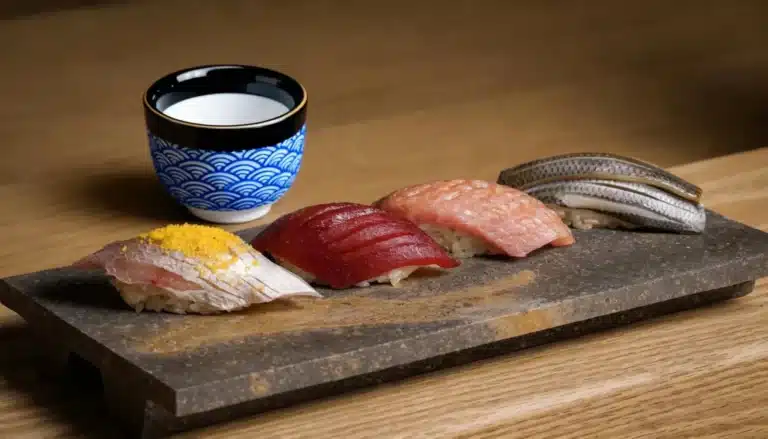
Joshua also broke down a distinction that I think helps a lot. Complementary pairings match similar textures or flavours. Contrasting pairings use the sake to cut through richness or reset the palate.
For example:
- complementary: fatty otoro with a rich Junmai or Kimoto
- contrasting: fatty hamachi with a crisp Junmai Ginjo with acidity
What surprised me was that he generally prefers contrasting pairings for sushi. His reasoning is convincing. Sushi already carries fat, umami, soy sauce, and rice vinegar. If I keep stacking richness on richness, the meal can become heavy. Contrast keeps it elegant.
The more omakase I eat, the more I agree with him. The pairings I remember best are often the ones that make the next bite feel sharper and more alive.
How I Would Order at Omakase Now
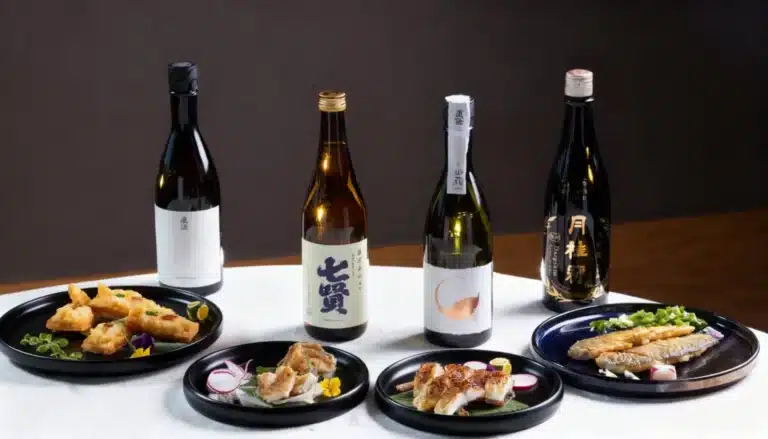
After speaking with Joshua, I would almost always choose pairings by the glass over one versatile bottle for a full omakase.
He put it perfectly. Omakase is like a musical progression, not a single note.
That line changed how I think about ordering. One bottle can be lovely, but it cannot easily adapt to every shift in the meal. A professional progression can. That is why I now see a sake pairing less as an add-on and more as part of the craft of the experience.
If I do have to navigate a big sake list on my own, I am borrowing Joshua’s three-question shortcut every time:
- Do I want something light or rich?
- Do I prefer aromatic or clean?
- Am I open to traditional styles like Kimoto?
That feels much more useful than staring blankly at labels and hoping for the best, especially when I’m dining at a Japanese Michelin restaurant or booking an omakase where every course is designed to build on the last.
Premium Sake Can Be Served Warm
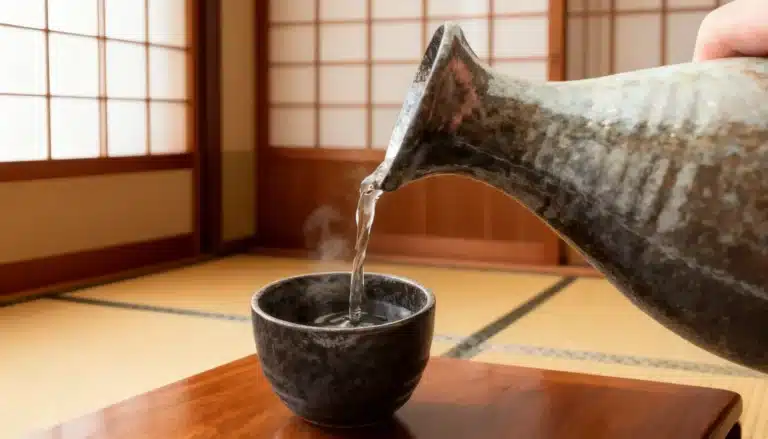
I also loved Joshua’s answer to the hot sake debate because it was much more nuanced than the usual stereotypes.
His answer was yes, premium sake can be served warm, but only certain styles. Heating works well with Junmai, Kimoto, and Yamahai because warmth can release umami and soften acidity. But delicate Ginjo and Junmai Daiginjo styles should generally not be heated because their aromatics are easily lost.
That is such an important distinction. Warm sake is not less. It is simply a different tool. Used in the right setting, it can be exactly what you need.
Why Joshua’s Perspective Matters

Joshua’s authority comes not only from study, but from how broadly he has explored sake. He explained that a Master Sake Sommelier is trained at the highest level in brewing methods, rice varieties, yeast, regional styles, service, storage, and food pairing. It is knowledge that runs from grain to glass.
What makes his point of view even more compelling to me is that he has never treated sake as something limited to Japanese food alone. He has paired it with Northern Indian cuisine, French cuisine, Italian food, Peranakan dishes, and even local hawker fare. That wider perspective makes his omakase advice feel even stronger because it is based on a deep understanding, not rigid tradition.
In 2018, he became the first Singaporean to win the Sake Sommelier of the Year award and also earned the Master Sake Sommelier title. That matters, of course. But what impressed me most in the interview was how clear and grounded his philosophy is.
FAQ
The biggest mistake is choosing sake based solely on prestige or strong aroma. As Joshua explained, highly aromatic styles can overwhelm the rice and delicate fish.
Because omakase intensity varies by course. A pairing by the glass can follow that progression much more naturally than one bottle.
Light, clean styles with elegant acidity usually work best. Joshua pointed to Junmai Ginjo and Tanrei Karakuchi as strong choices.
Light, clean styles with elegant acidity usually work best. Joshua pointed to Junmai Ginjo and Tanrei Karakuchi as strong choices.
Yes, but only certain styles. Junmai, Kimoto, and Yamahai can be excellent warm. More delicate Ginjo and Junmai Daiginjo styles are usually better not heated.
Conclusion
Interviewing Joshua Kalinan Sinnathamby changed the way I think about sushi sake pairing. I now pay more attention to the rice, to weight, and to flow across the meal. That shift has made omakase feel even more refined and enjoyable.
For me, that is the real luxury. Not choosing the most expensive bottle, but choosing the one that makes the sushi taste its best.
And if you love thoughtful pairings in other indulgences, too, book our Valentine’s Day spa promotion featuring premium sake and chocolate. It is a beautiful way to enjoy balance, pleasure, and a little Japanese-inspired romance beyond the sushi counter.