

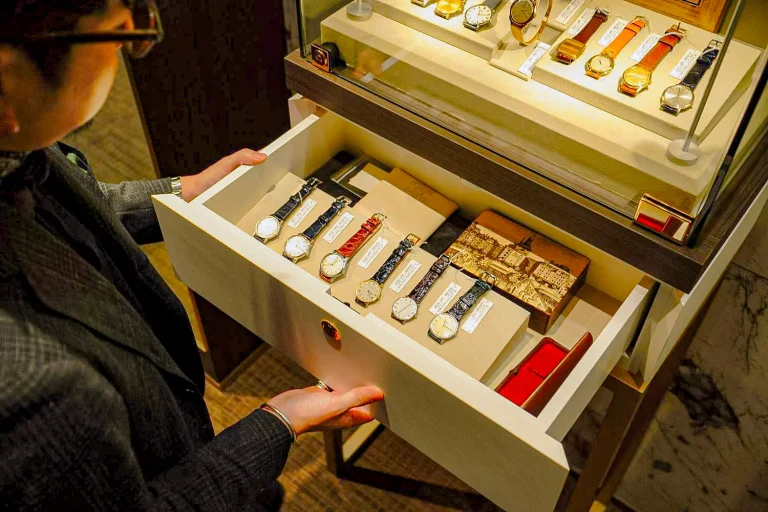
I recently came back from Tokyo, Japan, and like most trips, I returned with a camera roll full of food, cafés, pretty streets and far too many things I probably didn’t need to buy.
But there was one thing I didn’t expect to come home thinking about quite so much:
Watches.
I wasn’t the one looking for them. My boyfriend was.
My boyfriend has a deep passion for watches, especially the Seiko, which he really loves. I started exploring watch stores while we planned our sushi date, shopping activities, and sightseeing adventures. The watch boutiques drew me in as I examined their glass cases displaying timepieces and vintage watches.
At first, I was mostly there because he wanted to look. Then I started getting curious. I started to wonder about his need to study watches which showed no visible differences between them. Why was he spending so much time comparing watches that, to me, looked almost identical? Why could a watch he’d already seen online suddenly look completely different when he put it on his wrist? And perhaps most importantly, why do watch enthusiasts come all the way to Japan to hunt for watches?
That question sent me down to my own little rabbit hole.
My research into Seiko’s history led me to study Grand Seiko and vintage Japanese watches, as well as the different locations where watch enthusiasts explore Tokyo. I found out that Tokyo offers more than just watch shopping, with additional attractions.
For watch lovers, it is almost a playground.
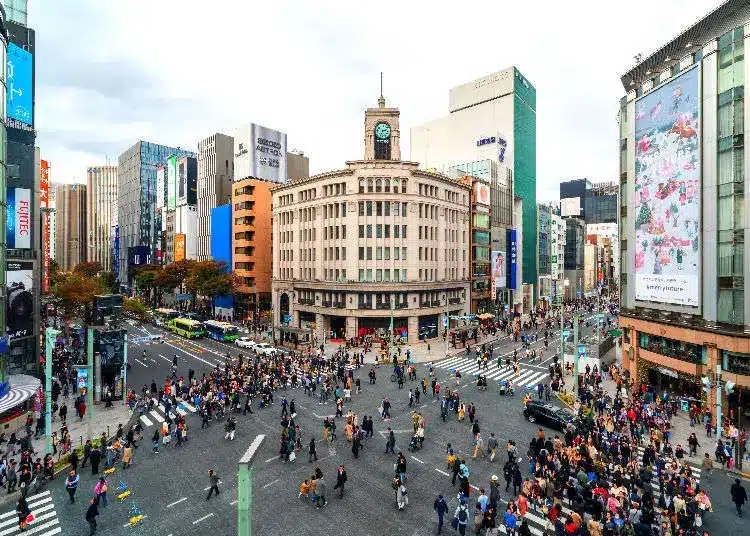
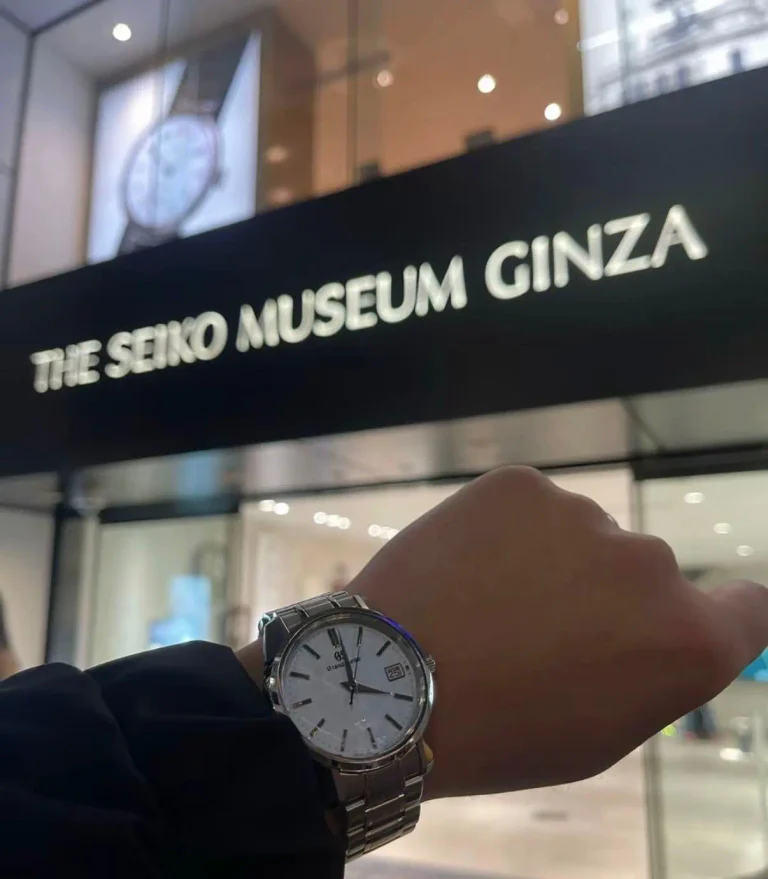
You can start your day in Ginza by trying on the latest Grand Seiko watches at their stylish boutique before heading to Nakano to explore their collection of used and classic timepieces. The shopping area features a range of stores, including luxury boutiques, department stores, specialist retailers, vintage dealers, and watch stores that display timepieces older than their customers.
And slowly I realised, my boyfriend’s obsession with watches started making a little more sense.
So, after coming back from Tokyo, I decided to put together this guide, which contains all the information you need before your trip about Grand Seiko locations in Tokyo, vintage Seiko discovery spots, Grand Seiko movement explanations, Japanese purchase cost benefits, and the essential decision about acquiring a Grand Seiko in Japan.
Should you actually buy a Grand Seiko during your trip to Japan?
Table of Contents
Why Is Tokyo Such a Big Deal for Watch Lovers?
There are plenty of reasons people travel to Japan. For me, it was the food, cafés, neighbourhoods and the general excitement of being somewhere that always seems to have something interesting around the next corner.
For watch enthusiasts, however, there is another reason to add to the list: The hunt.
Japan has a deep watchmaking heritage, with Seiko playing one of the most important roles in the country’s horological history. But what surprised me wasn’t just the number of Seiko watches I came across.
It was the culture surrounding them.
Tokyo gives you access to an almost ridiculous range of watches. You can walk into a polished luxury boutique and see the latest Grand Seiko models, then wander into a pre-owned shop and find a discontinued reference from decades ago. And because so many specialist retailers are concentrated in particular neighbourhoods, watch shopping can become an entire day in itself.
In Ginza, the experience feels polished and luxurious.
In Nakano, it feels more like treasure hunting.
For someone who loves watches, Tokyo isn’t simply somewhere to shop.
It’s somewhere to hunt.
From Seiko to Grand Seiko: What Is Actually Different
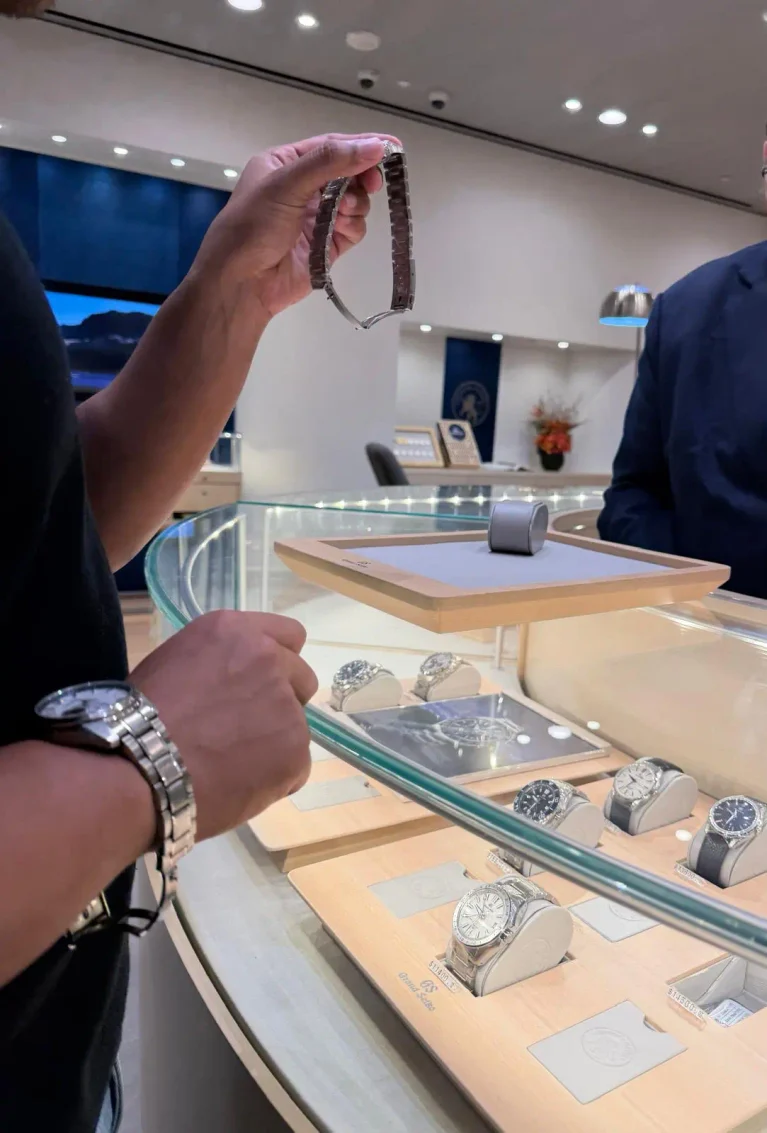
Before this trip, I knew Seiko. Grand Seiko was another matter.
I was confusing Grand Seiko with Seiko watches because I lack sufficient knowledge about watches and thought the only difference was which was more expensive.
But there is a little more to the story.
The first Grand Seiko watch was introduced to the market in 1960 when the company set out to develop a Japanese timepiece which would match the quality of top international watches. The brand developed its unique identity over its history by dedicating itself to precision watchmaking, superior case finishing, mechanical movement craftsmanship, and Japanese design principles.
Today, Grand Seiko has become a player in the luxury watch market, building its own customer base through its distinctive offerings. And once you start looking closely, you begin to understand why. A lot of the appeal isn’t immediately obvious.
It is in the details.
So, What Makes a Grand Seiko So Expensive?
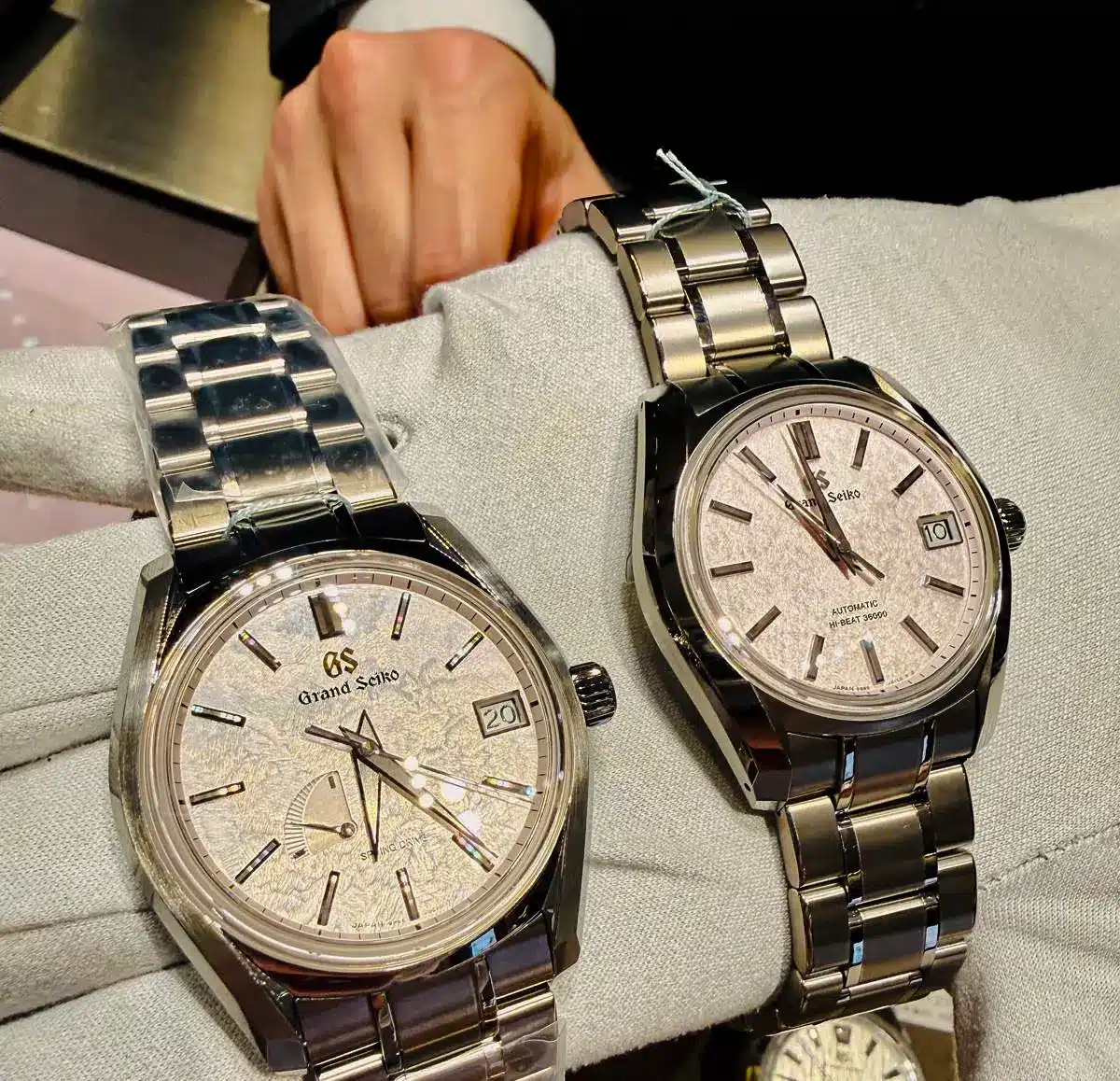
This was probably the question I was most curious about.
Because let’s be honest, when you first see a Grand Seiko costing $5,000 or more, you might wonder why it costs so much when a standard Seiko can be bought for a fraction of the price. The answer isn’t simply the name on the dial.
Grand Seiko produces its watches to establish itself as a competitor to the finest luxury timepieces worldwide. The brand presents hand-finished watches with specialised movements and Zaratsu-polished cases and dials, which display complex textures inspired by Japanese nature throughout the year. Grand Seiko created the Spring Drive movement, a unique in-house mechanism that produces a seconds hand that appears to float through the air. The standard Seiko watch provides watch enthusiasts with quality timepieces which people can afford. Grand Seiko takes that philosophy much further, with considerably more attention given to finishing, movement technology and the smallest details.
How Do You Choose a Grand Seiko?
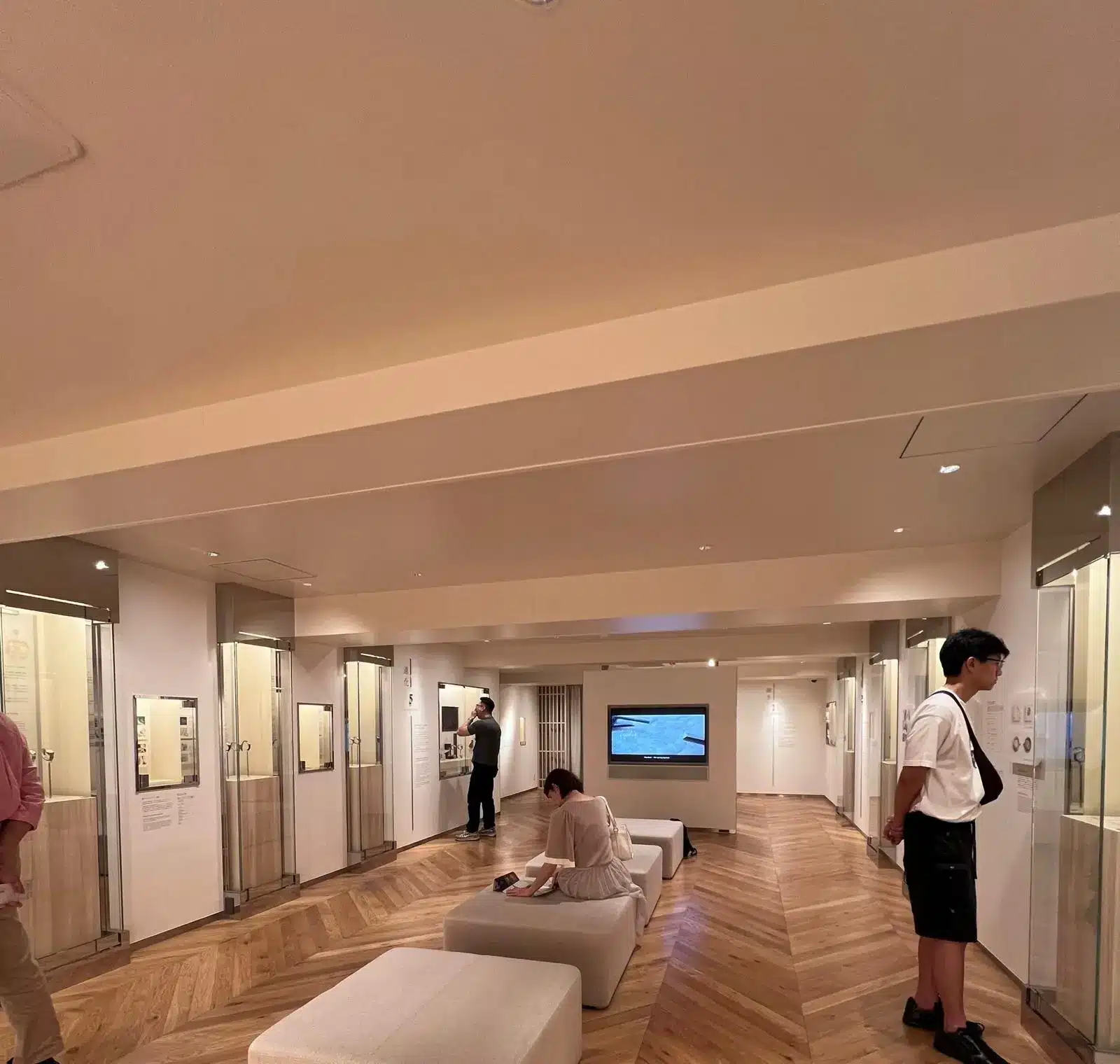
Once we started looking at Grand Seiko, choosing one wasn’t as simple as finding a dial you liked and checking the price tag. There were different movements, case designs, dial textures, sizes, and finishing techniques to consider, and apparently all of these things matter quite a lot when you’re a watch person.
I asked my boyfriend how he would actually go about choosing one.
I think I’d start with the movement, then the case and dial. But ultimately, it has to be a watch I actually want to wear.
That sounded simple enough.
Until I realised there were several different Grand Seiko movements to choose from.
Quartz, Automatic, Hi-Beat or Spring Drive?
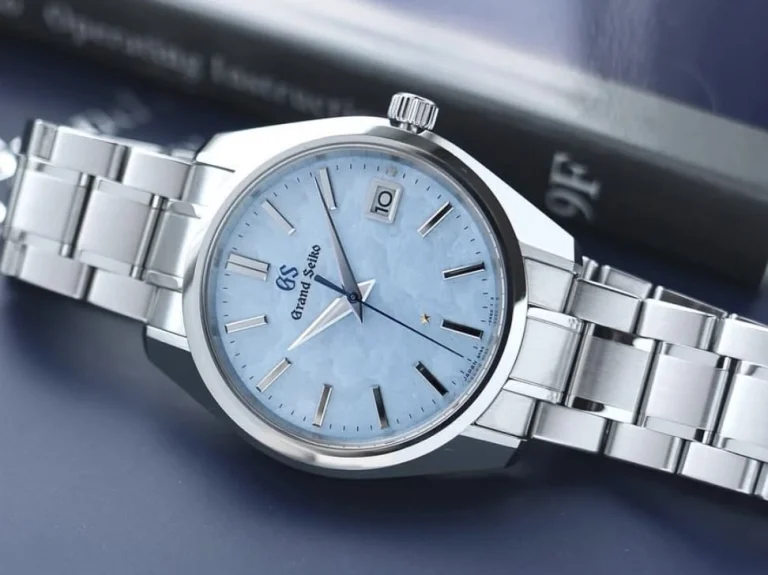
The first thing I learnt is that Grand Seiko doesn’t make just one kind of watch. Watch collectors need to understand that every watch movement brings its unique character to the table, as the value of a watch depends on personal preferences regarding watchmaking methods.
Quartz — 9F
I used to think quartz simply meant “battery-powered” and therefore less interesting. My boyfriend quickly corrected me.
Grand Seiko’s 9F quartz movements produce watches which deliver precise timekeeping through their well-made internal systems. The timepiece provides precise timekeeping with minimal upkeep, making it a great choice for people who need accuracy and want simple maintenance.
Automatic — 9S
Then there are the traditional mechanical movements. These watches power themselves from wrist movement, eliminating the need for a battery.
Collectors who love classic watchmaking can experience the magic of automatic Grand Seiko watches through the visible workings inside the watch case. The timepiece you wear functions as a miniature device which performs continuous operations on your wrist.
Hi-Beat — 9S
The next section goes beyond basic information to explain advanced concepts.
Grand Seiko’s Hi-Beat movements operate at a higher frequency than conventional mechanical movements. The system delivers better accuracy through its smooth seconds-hand operation but requires a complex design that requires continuous maintenance.
I didn’t fully appreciate why this mattered until I realised that, for collectors, the movement isn’t something hidden away inside the watch. The watch is the main reason they are requesting this item.
It is part of the reason they want the watch in the first place.
Spring Drive — 9R
The Grand Seiko Spring Drive technology emerged as the most popular topic of discussion during our visit.
The watch has a unique characteristic: its seconds hand moves by mechanical power, while an electronic system controls its speed to produce an unbroken sweeping motion across the watch face. It holds special appeal for me even though I don’t spend much time thinking about timepieces.
Spring Drive is probably one of the biggest reasons I’m interested in Grand Seiko. It’s something that’s quite unique to the brand, and you can actually see the difference when the seconds hand moves.
And that made me realise that choosing a Grand Seiko isn’t necessarily about finding the “best” movement.
It’s about deciding what kind of watch enthusiast you are even if, like me, you aren’t really a watch enthusiast at all.
Then There Is the Case
Once you’ve figured out what is happening inside the watch, there is the case to think about.
The hearing of 44GS and 62GS names made me think about watch model numbers, which I needed to remember but never thought I would find interesting.
Grand Seiko shows its brand identity through the design elements that appear across all its case models. The 44GS established the design elements which now define Grand Seiko through its use of precise angles and bold lines, its combination of shiny and matte finishes, and its exact balance in design elements.
The process undergoes Zaratsu polishing as its next step.
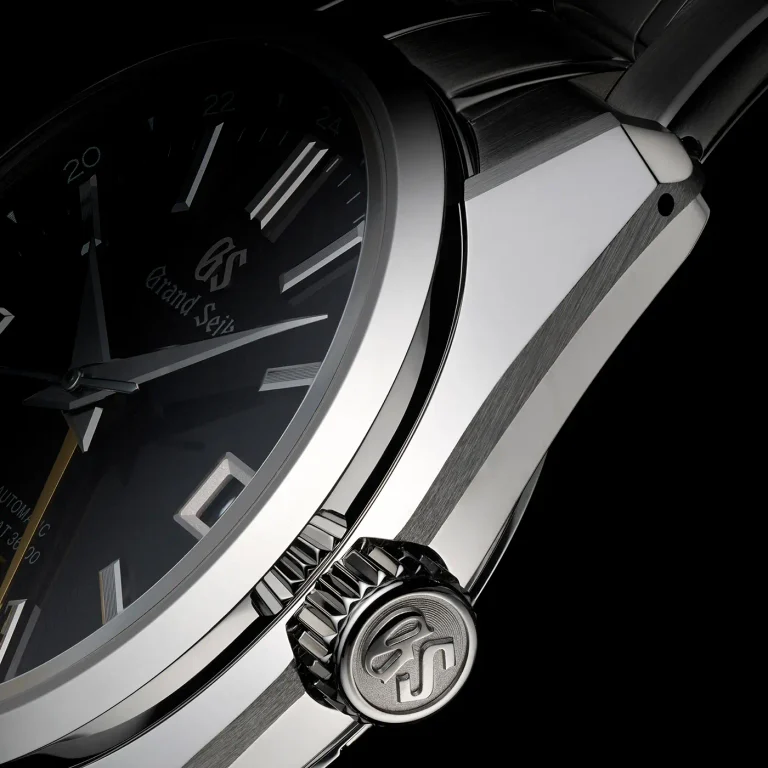
This is one of those things that sounds incredibly technical until you actually see it. Grand Seiko uses the technique to create highly reflective, distortion-free surfaces on parts of its cases. Under the light, those polished surfaces catch your eye immediately, especially when contrasted against the brushed sections.
My boyfriend pointed this out to me several times. I probably nodded as I understood.
I didn’t.
But after seeing a few watches side by side, I started noticing it too.
And Finally, the Dial
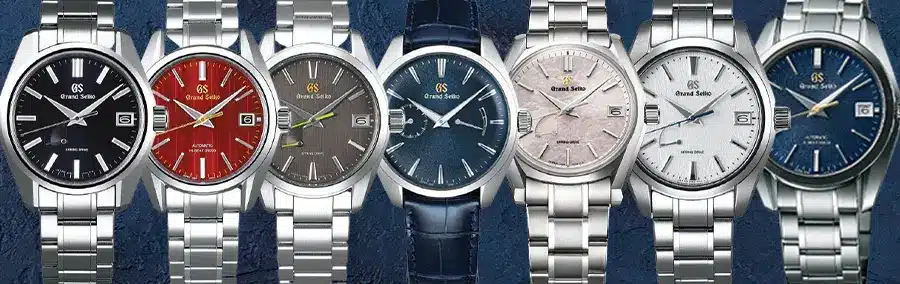
This was the part I understood immediately.
The dials of Grand Seiko offer the simplest way for watch newcomers to recognise the brand’s unique value in the market. Its selection process goes beyond black and white and blue, as you begin to see dials that draw inspiration from Japanese nature throughout the year.
There is the famous Snowflake, inspired by the snowy landscape of the Shinshu region. There are dials inspired by cherry blossoms, forests, mountains, lakes and even the changing colours of the seasons.
We came across the Shunbun during our trip, with its soft pink dial inspired by cherry blossoms in spring. In photographs, it is beautiful. But seeing the texture in person was different.
The surface isn’t simply “pink”.
It has depth.
The light changes across it as you move your wrist, and suddenly I understood why collectors spend so much time looking at dials under different lighting.
The dial is probably the first thing that attracts me. With Grand Seiko, there are so many textures and details that you don’t really appreciate until you see them in person.
And perhaps that is the biggest lesson I took away from watching him shop.
There isn’t necessarily a single Grand Seiko everyone should buy.
You might care about the movement. You might be drawn to the case. You might fall completely in love with a particular dial. Or you might simply try one on and realise that it feels right on your wrist.
For my boyfriend, it seems to be a combination of all three.
For me?
I’m still learning the difference between a 44GS and a 62GS.
But at least now I know why he’s looking.
An automatic mechanical watch is powered by the movement of your wrist.
For many collectors, this is part of the charm. There is something romantic about wearing a tiny mechanical machine on your wrist that doesn’t rely on a battery in the conventional sense.
A Watch Collector’s Bookmark: Plus9Time
If you’re going down the Seiko rabbit hole before your Japan trip, there is one website worth bookmarking:
Plus9Time.
My boyfriend called it one of the most useful resources for understanding Seiko and Grand Seiko watches.
It goes deep into references, movements, production information and model history.
If you’re the kind of person who wants to know exactly which reference you’re looking at before handing over several thousand dollars, this is the sort of resource you’ll want to have open on your phone.
I Asked a Seiko Lover What He Looks For
Before our trip to Japan, I knew my boyfriend loved watches. I just didn’t completely understand why.
My boyfriend showed a strong interest in watches before we started our journey to Japan. I had no idea what made him so passionate about watches.
A watch can serve three purposes: its beauty, its usefulness, and its emotional value. I could see he understood all these symbols as he tried to explain them:
References. Movements. Finishing. Dials. History.
So naturally, I decided to ask him a few questions.
What made you fall in love with Seiko in the first place?
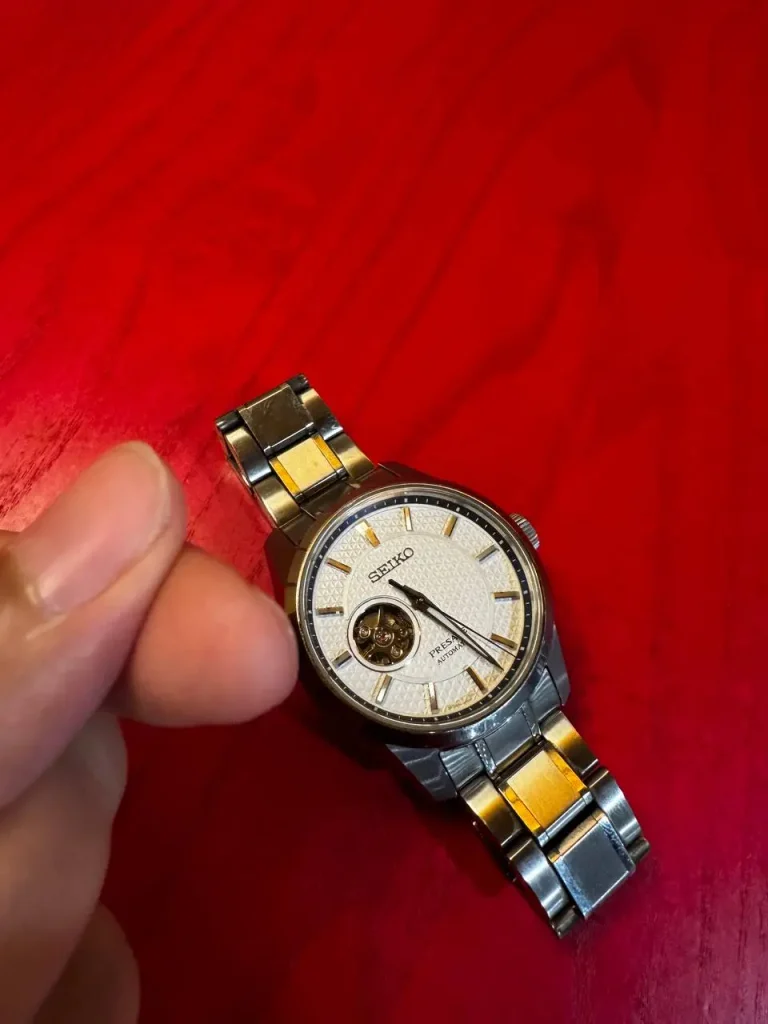
"The first time I learned about Seiko came from their famous reputation which made me want to learn more about them. I wanted to buy a mechanical watch because Japanese brands receive praise for their manufacturing techniques and product maintenance. The dial pattern on my Presage watch remains my favourite feature because it creates such a striking effect. The way Grand Seiko makes watches draws me in deeply. You have dials like the Sakura-inspired ones where there's so much detail and texture."

That made more sense to me.
It wasn’t simply about owning an expensive watch but appreciating how something was made.
So why Grand Seiko?
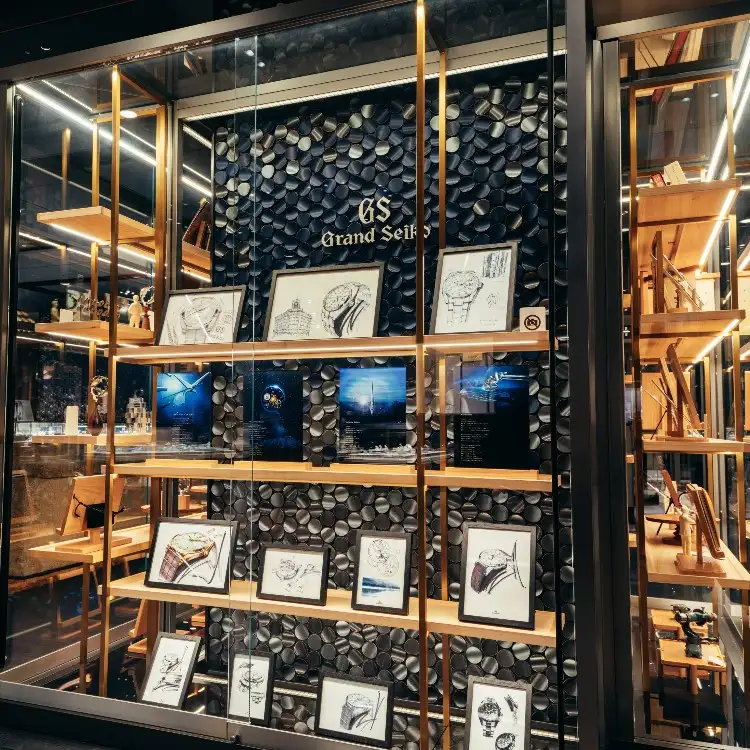
"Grand Seiko takes a lot of what I already appreciate about Seiko and brings the craftsmanship to another level. The two things that really stand out to me are Spring Drive and the dial craftsmanship. Even if you don't know much about watches, you can look at some Grand Seiko dials and immediately see how much attention has gone into them."
Did seeing the watches in Japan feel different from seeing them online or in Singapore?
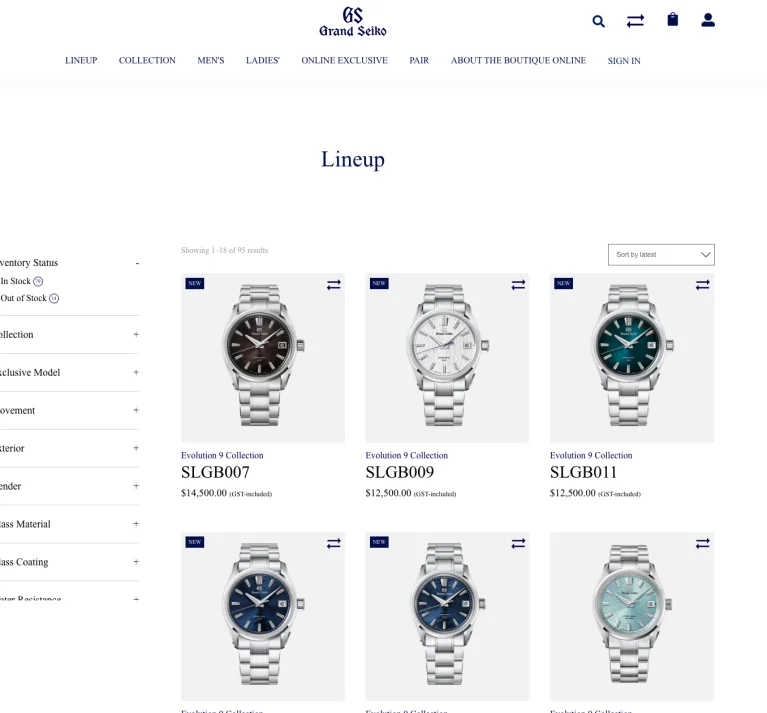
"Definitely. There was so much variety of timepieces in Tokyo, including Grand Seiko, vintage Rolexes and Cartiers. I wasn't looking for an investment piece; I wanted to discover classic watches that I could enjoy for years, which made the experience even more enjoyable."
That last part stuck with me.
Because it brings us to a question that comes up constantly when people talk about luxury watches.
Is Grand Seiko Actually an Investment?
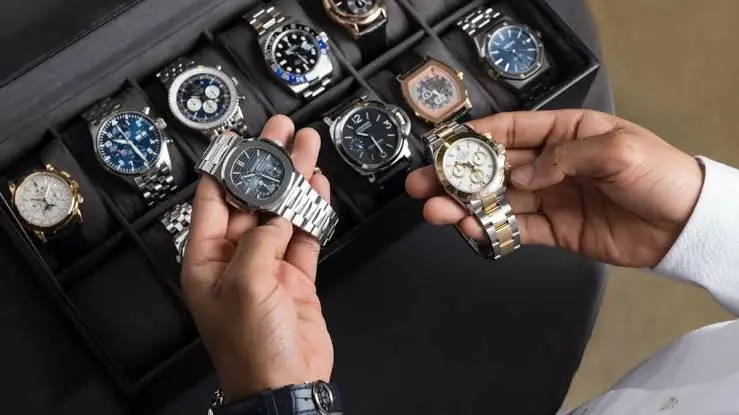
The short answer? No, you shouldn’t buy a Grand Seiko expecting to make a profit.
Unlike certain Rolex, Patek Philippe or Audemars Piguet models that can command significant premiums on the secondary market, most Grand Seiko references don’t perform that way after leaving the boutique.
That doesn’t mean they have no resale value. Rare limited editions, discontinued references and sought-after vintage pieces can hold their value considerably better. But if your main goal is financial return, Grand Seiko probably isn’t the watch to buy.
Which is why my boyfriend’s approach made more sense to me.
When I asked him about resale value, he told me:
I wasn’t looking for an investment piece; I just wanted to discover classic watches I could enjoy for years.
And I think that says a lot about the appeal of Grand Seiko.
You’re buying it because you genuinely want to wear it for the Spring Drive, the dial, the finishing, or simply because it marks a milestone in your life.
Not every watch needs to be an investment. Sometimes, the value is in the story you get to keep wearing.
Where Should You Buy a Grand Seiko in Tokyo?
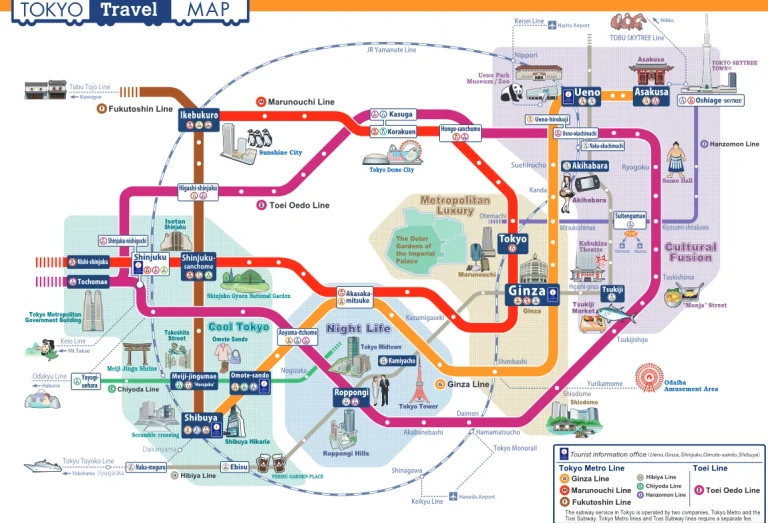
This was probably the question my boyfriend had been waiting for me to ask.
Once I realised how many places there were to buy watches in Tokyo, I quickly understood that you shouldn’t treat watch shopping as one random stop.
Instead, I would divide your trip into two main areas:
Ginza for the new and luxurious experience.
Nakano for the pre-owned and vintage hunt.
Here’s the cheat sheet I wish I had before going.
Zone 1: Ginza, The New Grand Seiko Experience
Vibe: Luxury, polished boutiques, brand-new watches and impeccable Japanese hospitality.
If you’re buying your first Grand Seiko, this is where I would start.
You can try current models, compare different movements and get a feel for what actually looks good on your wrist.
GRAND SEIKO FLAGSHIP
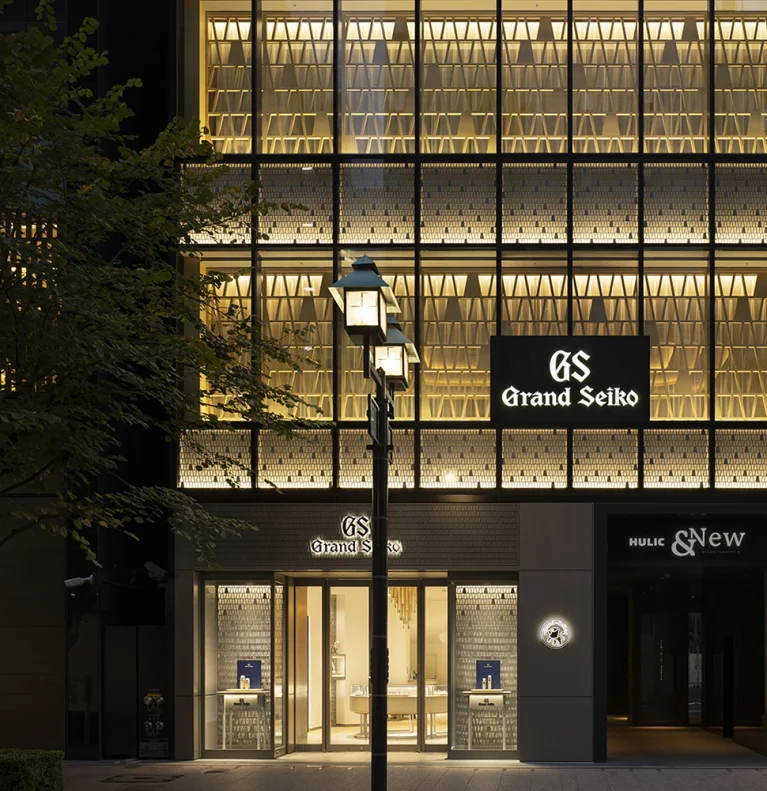
Address: 6 Chome-6-5 Ginza, Chuo City, Tokyo 104-0061, Japan
Nearest Station: Ginza Station
Best for: New Grand Seiko watches and the full luxury boutique experience.
The first place I would recommend for visitors who want to discover Grand Seiko watches stands out above all other options. People should spend their time at their own speed. Explore multiple options for case sizes.
The dials show their details when the light shines on them. I plan to explore the store without any particular goal, so I will inform the staff about my shopping approach.
My boyfriend found it appealing because the store staff did not push him to buy something right away.
If you’re particularly interested in limited or boutique-exclusive models, it’s also worth asking the staff what is available specifically at the boutique.
SEIKO HOUSE GINZA
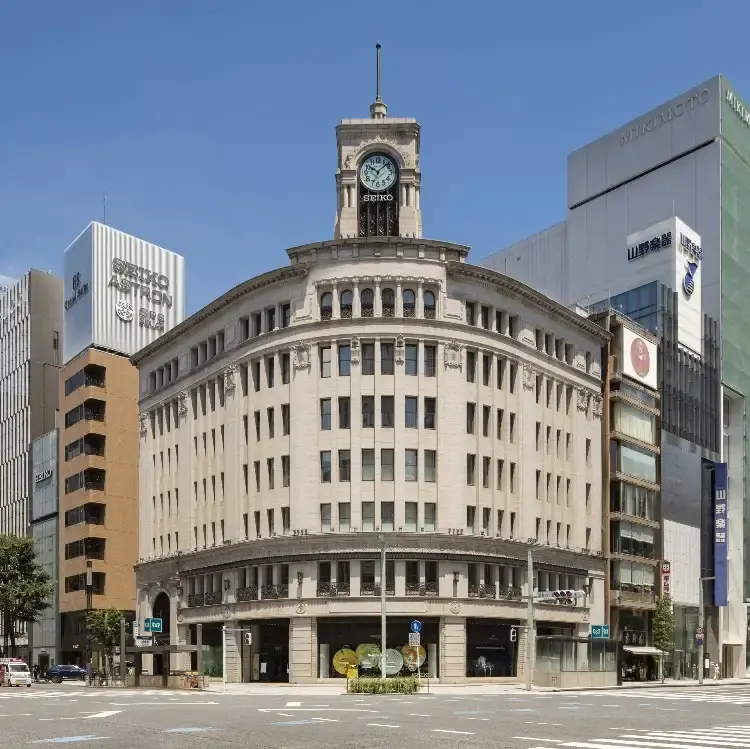
Address: 4 Chome-5 11 Ginza, Chou City, Tokyo 104-0061, Japan
Nearest Station: Ginza Station
Best for: Seiko heritage.
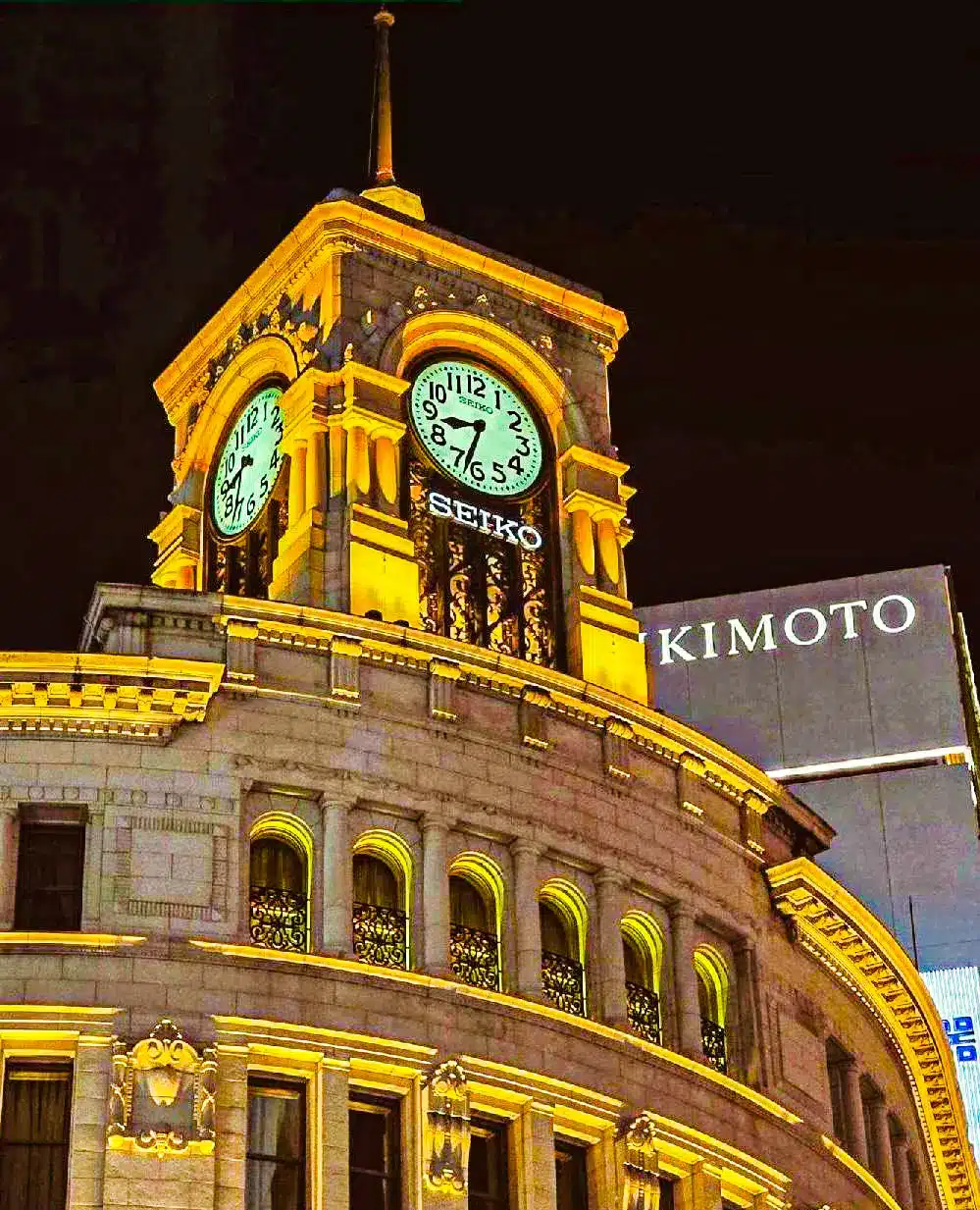
The famous clock tower at the 4-chome intersection in Ginza is an essential part of any discussion of Seiko in Tokyo.
Seiko House Ginza allows visitors to explore the brand through its original building, which functions as more than just a typical watch store.
Even if you don’t make any purchases, I would recommend visiting this place during your trip.
MITSUKOSHI & MATSUYA GINZA
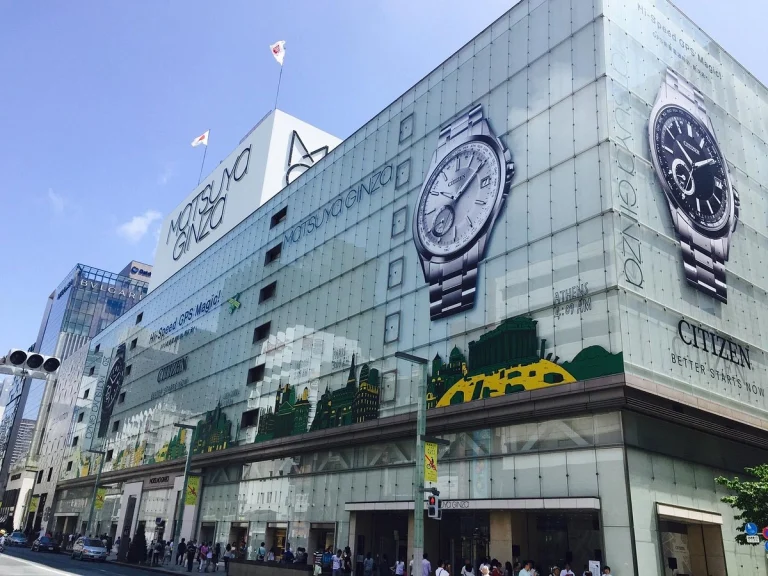
Address: 3 Chome 6-1 Ginza, Chuo City, Tokyo, 104-8130, Japan
Nearest Station: Ginza Station
Best for: Comparing new watches and exploring department-store shopping.
Tokyo’s major department stores can also be worth checking, particularly if you’re eligible for tourist shopping benefits.
But don’t assume that every discount applies to every luxury watch brand.
Some department-store tourist cards and promotions exclude certain luxury brands, so always ask before calculating your expected savings.
And remember that department-store tax-free processing can work differently from buying directly through a standalone retailer.
Zone 2: Nakano, Where the Watch Hunt Gets Interesting
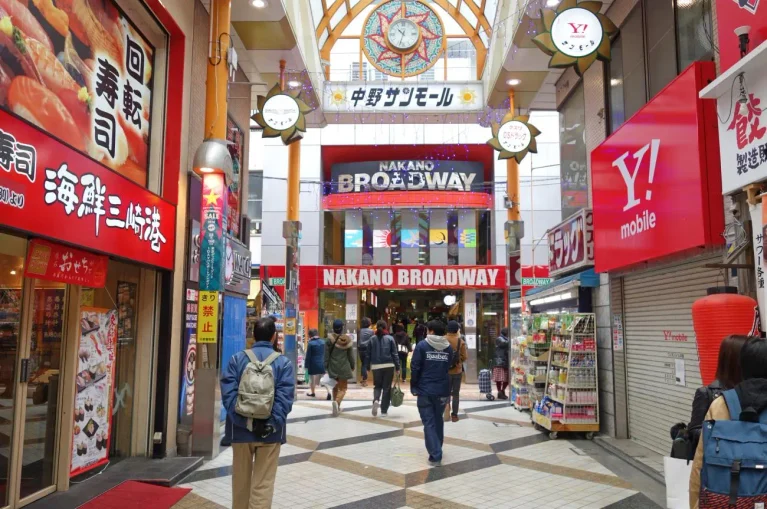
Ginza offers a luxury showroom experience, but Nakano offers visitors a treasure-hunting adventure.
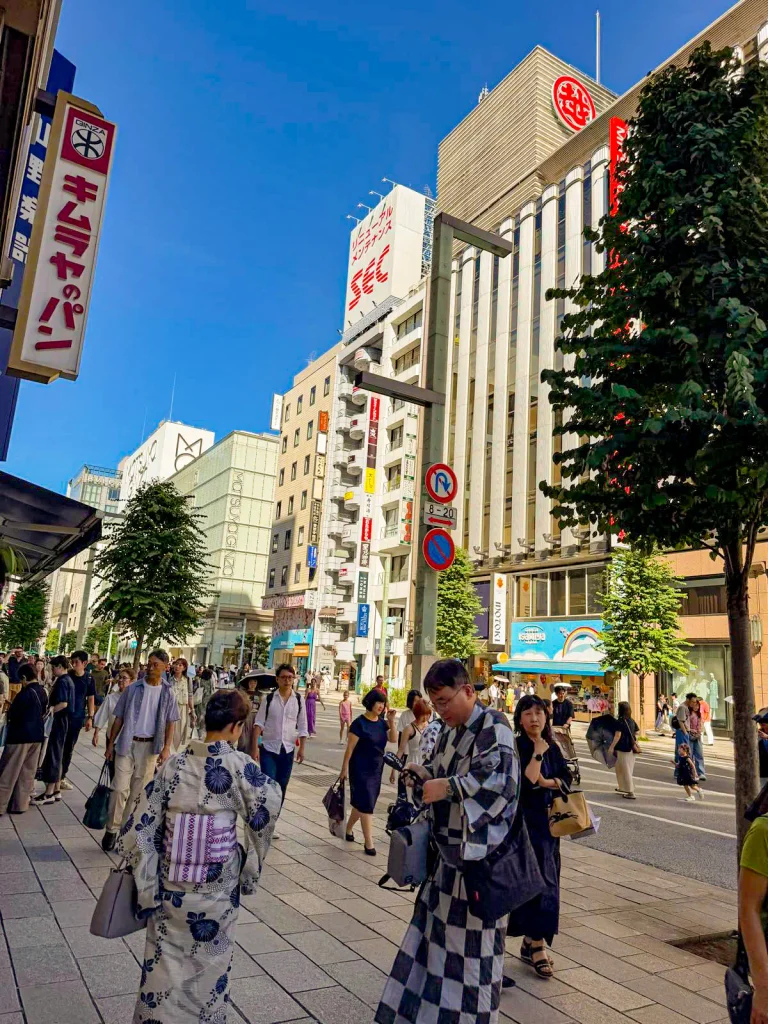
You need to board the Chuo Line until it reaches Nakano Station, where you should exit through the North Exit to walk under Sun Mall’s roof until you reach Nakano Broadway.
The place stands out because it contains numerous speciality shops which operate in the same location.
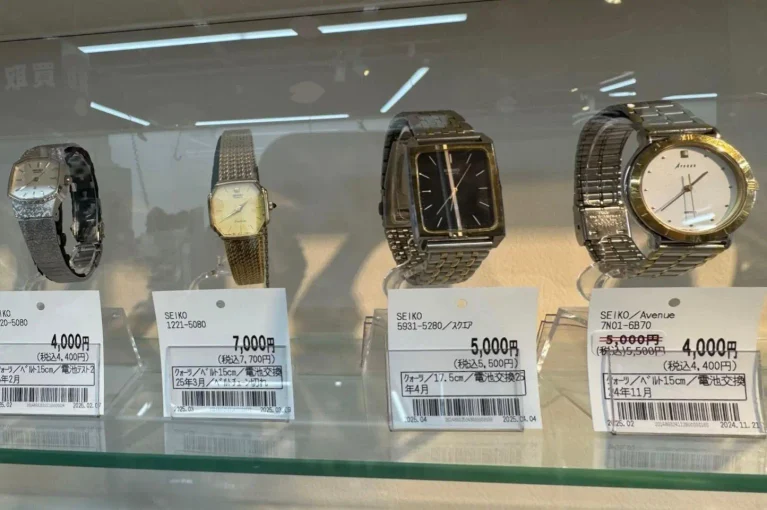
The pre-owned market becomes more exciting for buyers looking to explore secondhand items at this stage of the process.
JACKROAD AND BETTY
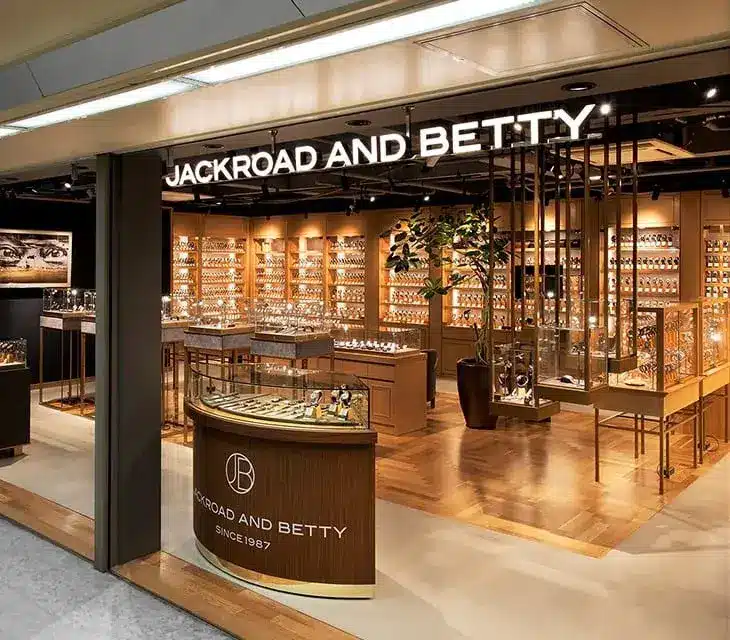
Address: 3F Nakano Broadway, 5-52-15 Nakano, Nakano-ku, Tokyo 164-0001
Nearest Station: Nakano Station
Best for: Pre-owned luxury watches and variety.
JACKROAD is one of the names you’re likely to encounter when researching Tokyo’s pre-owned watch market.
The appeal is the sheer amount of inventory.
Instead of looking at one Grand Seiko model and deciding whether you like it, you can compare different generations, references and conditions side-by-side.
That can be incredibly useful if you’re trying to understand what your money gets you in the pre-owned market.
And don’t go in expecting to haggle your way to a bargain.
Prices are generally fixed.
FIRE KIDS
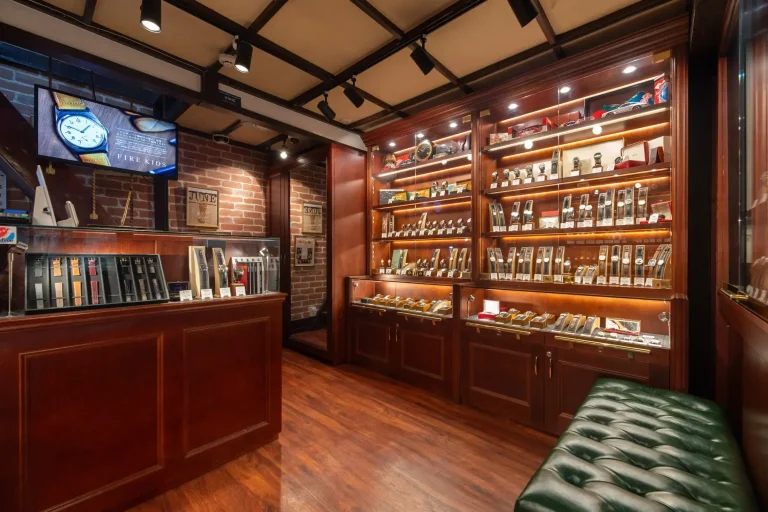
Address: 1F Nakano Broadway (Shops 140 7 141), 5-52-15 Nakano, Nakano-ku Tokyo 164-0001
Nearest Station: Nakano Station
Best for: Vintage Japanese watches.
Customers start their experience here, transforming their shopping from buying typical luxury products into discovering historical artefacts.
Vintage Seikos display natural ageing through their developed patina and their original manufacturing irregularities. And that’s precisely the point. The search does not require you to find items which appear completely untouched by time.
You’re looking for something that has already lived a life.
What About Buying Grand Seiko Pre-Owned?
If you’re comfortable with pre-owned watches, Japan can be particularly interesting.
You may come across:
- Discontinued Grand Seiko references
- Older dial designs
- Previous-generation movements
- Vintage Seiko and King Seiko
- Watches no longer available through modern boutiques
- Near-new watches being resold by their previous owners
You should take your time during this stage of the process. A lower price isn’t automatically a better deal.
Look carefully at:
01 Condition
Check the case, crystal, bracelet and dial.
02 Originality
Ask whether any components have been replaced.
03 Service history
A vintage watch may need servicing even if it looks beautiful.
04 Box and papers
These can affect both provenance and resale value.
05 Bracelet links
This one is easy to overlook.
A pre-owned watch may already have been sized for its previous owner’s wrist.
The complete set of replacement links must exist when you buy a bracelet model.
What If I Don’t Speak Japanese?
This was one of the questions I had before we went.
The good news is that you don’t need to speak Japanese to go watch shopping in Tokyo.
Major luxury boutiques and established watch retailers regularly deal with international visitors.
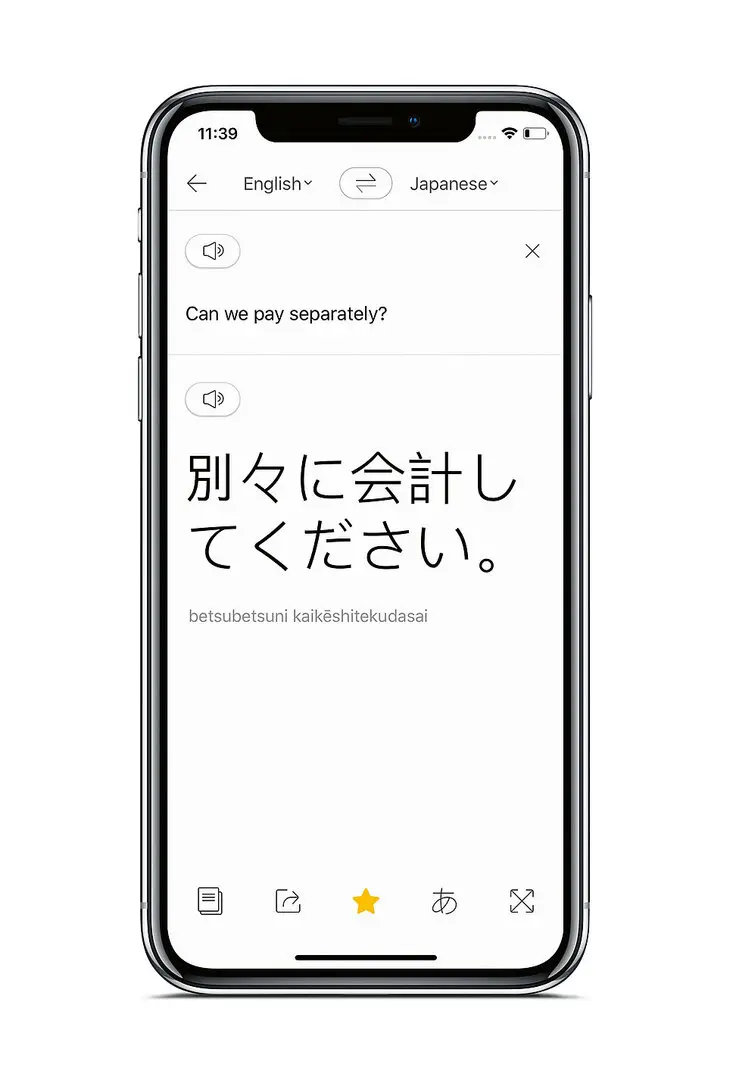
In many cases, staff can communicate in English or use translation tools when necessary.
But I’d still recommend preparing a little before you go.
Save the exact reference number you’re interested in.
Have the model name written down.
And if you’re asking about something specific such as tax-free eligibility, warranty, or service history, don’t be afraid to use a translation app to make sure both sides understand the details.
A little preparation makes a surprisingly big difference when you’re standing in front of a watch that costs several thousand dollars.
Is Grand Seiko Cheaper in Japan?
This is probably the question everyone wants a simple answer to.
Sometimes.
But don’t fall into the trap of assuming that every Grand Seiko is automatically cheaper in Japan. Your actual cost depends on several things:
- Japanese retail price
- Tourist tax-free benefit, if eligible
- JPY/SGD exchange rate
- Credit-card or foreign-exchange fees
- Any taxes or duties when you return home
That’s the number you should compare. The exchange rate can make a significant difference, but it changes constantly.
You need to pay foreign-exchange fees when you purchase expensive watches because they increase the overall cost. You need to check the item’s official price in Japan before you purchase it, as this will help you determine whether it’s worth it compared with the retail price in Singapore.
Don’t compare vague “Grand Seiko prices.” You need to compare the exact watch model.
A Note About Japan’s 2026 Tax-Free Changes
You need to check this information before your 2026 journey to Japan.
Japan will change its tax-free shopping system on November 1, 2026, switching from point-of-sale tax exemption to a refund-based system.
Tourists need to follow new procedures when purchasing high-value goods.
Because tax rules and procedures can be updated, I strongly recommend checking the latest information from Japan’s official authorities immediately before your trip rather than relying on an old travel blog, including the documentation you need, how refunds are processed and what happens when you leave Japan.
For any luxury purchase, I would treat the tax-free saving as a bonus rather than the reason to buy.
Don’t Forget Your Home-Country Customs
There is another part of the equation that’s easy to forget when you’re standing in a beautiful Tokyo boutique.
You still have to bring the watch home.
Before buying an expensive watch overseas, check the customs and tax rules for your country of residence.
If you’re returning to Singapore, for example, check the latest Singapore Customs rules on GST relief and declarations before travelling.
A watch being tax-free in Japan does not automatically mean it is exempt from taxes or declaration requirements when you return home.
And nobody wants their dream watch purchase to become an unexpected customs headache.
What About the Warranty?
You need to learn about the specific warranty details which come with your brand-new Grand Seiko watch before you buy it.
The international warranty from Grand Seiko protects overseas customers, but you should check the warranty details when you buy the watch.
If you’re based in Singapore, official servicing is available locally through the authorised Seiko service network.
For a pre-owned watch, however, the situation can be different.
Ask:
- Is there a remaining manufacturer warranty?
- Does the retailer provide its own warranty?
- When was the watch last serviced?
- Has anything been replaced?
- Where would you send it if something goes wrong?
These questions may feel boring when you’re staring at a beautiful watch.
Ask them anyway.
New or Pre-Owned: Which One Should You Buy?
After seeing both sides of Tokyo’s watch market, I think this comes down to what you’re actually looking for.
Buy New If You Want:
- The latest Grand Seiko models
- Boutique or current collections
- The full buying experience
- Manufacturer warranty
- A completely untouched watch
- A special milestone purchase
Consider Pre-Owned If You Want:
- Discontinued references
- Older Grand Seiko models
- Vintage Seiko
- A wider range of prices
- Rare or harder-to-find references
- The thrill of finding something unexpected
Personally, I think there’s something special about both.
Ginza gives you the luxury experience.
Nakano gives you the hunt.
If you have enough time, I’d do both.
What I Wish I Knew Before Watch Shopping in Tokyo
If I were going back tomorrow, these are the things I’d keep in my notes app.
1. Know the reference number
Don’t just save a picture. Save the exact reference.
Two watches can look almost identical but have completely different movements, specifications and prices.
2. Try the watch on
Especially if you’re spending thousands of dollars.
A watch that looks perfect online may feel too large, too small or completely different once it’s actually on your wrist.
3. Check the bracelet links
Especially for pre-owned watches.
Make sure the watch can actually be sized comfortably for you.
4. Ask about warranty
Don’t assume.
Ask what warranty applies and who handles servicing.
5. Compare the final price
Don’t get distracted by a big-looking tax-free saving.
Calculate your actual cost after exchange rates and payment fees.
6. Don’t buy because you’re afraid you’ll never see it again
This is probably the most important one. Tokyo has an enormous watch market.
Walk away if you feel unsure about the situation. You can always come back.
Should You Buy a Grand Seiko During Your Trip to Japan?
I discovered something new about watches after I spent time examining them throughout Tokyo. Collectors view watches as more than just timekeeping devices.
A watch serves as a marker which people use to celebrate their achievements. It functions as a prize which people earn through their accomplishments. People use watches to remember particular life periods which they experienced.
My boyfriend actually wore his very first Seiko throughout our trip. It was a watch he bought during his first trip to Japan, back when he was just starting his career. The watch became something special because he kept wearing it over the years.
It had a story.
So naturally, I asked him what his dream Grand Seiko would be for his next big milestone.
He already had an answer.
"There's actually one that hasn't been released yet that I already have my eye on, the SLGB015 Lake Suwa in 37mm. I'd still want there to be a milestone behind buying it. That's part of what makes owning the watch meaningful to me."
And honestly, I think that’s the best answer to the question.
If you’re buying one because you love the craftsmanship, want something you can wear for years and have the opportunity to attach it to an important memory, then Japan makes a pretty compelling place to find one.
It’s something you buy that becomes part of the story.
My Tokyo Grand Seiko Shopping Cheat Sheet
If you’re reading this on the Tokyo train and don’t have time to scroll through the entire article, save this.
| Area | Go Here For | Best For |
|---|---|---|
| Ginza | Grand Seiko boutiques & Seiko heritage | New watches, trying models, luxury experience |
| Seiko House Ginza | Seiko history | Heritage & sightseeing |
| Department Stores | New watches & tourist shopping benefits | Comparing prices |
| Nakano Broadway | Pre-owned & vintage | Collectors & treasure hunting |
| JACKROAD | Large pre-owned selection | Comparing references |
| FIRE KIDS | Vintage Japanese watches | Vintage Seiko & older pieces |
If I had one day:
Morning: Ginza → Grand Seiko Boutique → Seiko House Ginza
Afternoon: Take the Chuo Line → Nakano → Nakano Broadway → JACKROAD → FIRE KIDS
Before buying: Check the reference → try it on → compare prices → check warranty → check tax rules → check your home-country customs requirements.
Then decide.
Frequently Asked Questions
Is Grand Seiko the same as Seiko?
Grand Seiko originated within Seiko but has developed into a distinct luxury watch brand with its own identity, movements, finishing techniques and design philosophy.
Is Grand Seiko cheaper in Japan?
It can be, particularly when the Japanese price, exchange rate, and tax-free benefits for tourists work in your favour. However, pricing varies by reference and retailer, so compare the exact model rather than assuming every Grand Seiko is cheaper.
Is Grand Seiko a good investment?
It is better approached as a luxury purchase than a guaranteed investment. Resale performance varies considerably by reference, rarity, condition and market demand.
Which Grand Seiko movement should I choose?
It depends on what you value. Quartz focuses on precision and practicality; automatic movements offer traditional mechanical watchmaking; Hi-Beat appeals to enthusiasts interested in high-frequency mechanical movements; while Spring Drive is known for its distinctive technology and smooth seconds-hand glide
What is Spring Drive?
Spring Drive combines a mechanical power source with an electronic regulating system. One of its most recognisable features is the continuously gliding seconds hand.
What is Zaratsu polishing?
Zaratsu is a specialised polishing technique associated with Grand Seiko’s distinctive case finishing. It creates highly reflective, distortion-free surfaces that contrast with brushed sections of the case.
Where should I buy a Grand Seiko in Tokyo?
For new Grand Seiko watches, Ginza is the obvious place to start, particularly the Grand Seiko boutiques and major department stores. For pre-owned and vintage watches, Nakano Broadway is one of the most interesting areas to explore.
Is Nakano Broadway only for vintage watches?
No. You can find modern, unworn, pre-owned and vintage watches throughout the area. This variety is one of the reasons collectors enjoy visiting.
Do I need to speak Japanese to buy a watch in Tokyo?
Not necessarily. Major boutiques and established retailers regularly serve international customers, and translation tools can help when discussing more complex details such as warranties, servicing, or tax-free procedures.
Do I need an appointment to visit a Grand Seiko boutique?
Policies can vary by boutique and may change, so check the specific store before visiting. For a simple browsing trip, however, don’t assume you need an appointment — check the boutique’s current visitor policy first.
Can I buy Japan-exclusive Grand Seiko watches?
Some Grand Seiko models and editions may be limited to particular markets, boutiques or regions. If you’re interested in something difficult to find outside Japan, ask the boutique staff which Japan-specific or boutique-exclusive pieces are currently available.
Can I service a Japan-bought Grand Seiko in Singapore?
For a new watch purchased through an authorised retailer, check the current international warranty terms and Singapore’s authorised service arrangements. For pre-owned watches, confirm the retailer’s warranty and servicing arrangements before purchasing.
Should I buy a new or pre-owned Grand Seiko?
Buy new if you want the latest models, a full manufacturer warranty and the complete boutique experience. Consider pre-owned if you are hunting for discontinued references, older models or a wider range of prices.
What should I check before buying a pre-owned watch?
Check the exact reference, condition, originality of components, service history, warranty, box and papers, and whether the bracelet includes enough spare links for your wrist.
How does Japan’s tax-free shopping work?
Japan’s tax-free shopping rules are changing from November 1, 2026. Because the system and procedures are time-sensitive, check the latest official Japanese government guidance before your trip rather than relying on older articles.
Do I have to declare my watch when I return home?
Your obligations depend on the customs and tax rules of your home country. For an expensive luxury purchase, check those rules before travelling and declare the watch where required.