

Anma Deep Tissue Massage

Deep Tissue Massage in Singapore Since 2009
As one of Singapore’s earliest Japanese spas, we’ve been introducing guests to traditional Anma massage since 2009. Its combination of pressing, kneading and rhythmic hand movements remains part of our Japanese approach to caring for tight, tired muscles.
Shoulders that never seem to relax? Stubborn knots across your back after another day at your desk? Our Anma deep-tissue massage offers focused muscle work in a relaxing Japanese spa setting.
Tell your therapist where you feel tension and how much pressure you prefer, so your session can focus on the areas that matter to you.
Is Anma the Massage You’re Looking For?
Perhaps you want more attention around your shoulder blades. Your upper back feels constantly tight. Or you enjoy a firm massage but find yourself wishing the therapist would spend more time on the areas that bother you.
These are useful things to discuss before choosing your treatment.
Anma may suit you if you prefer focused muscle work rather than a gentle massage. Let your therapist know which areas matter most, which feel sensitive and where you would like lighter pressure.
Firm pressure should remain manageable. You should never feel that you need to endure pain to get value from your session.
Focused Attention to Shoulder and Back Tension
Anma offers hands-on attention to tight, tired muscles. A small study involving 15 women also reported reduced neck and shoulder stiffness following a 40-minute Anma session.
For your own visit, be specific about what you feel. “The area between my shoulder blades feels tight” gives your therapist a clearer starting point than simply asking for a strong massage.
Discussing your priorities helps your therapist plan the available treatment time.
7 Authentic Anma Techniques
Different hand movements give Anma its varied rhythm and character. The numbered guide below explains what each technique involves.
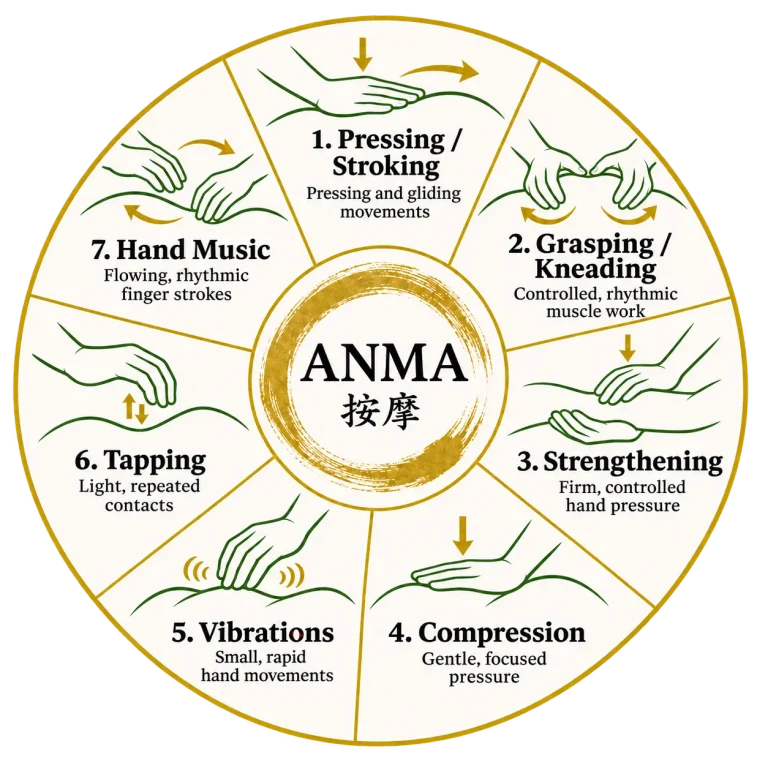
1. Pressing / Stroking
The therapist applies pressure to selected areas while gliding their hands along the body, adjusting the pressure to your comfort.
2. Grasping / Kneading
Muscular tissue is gently grasped and worked through repeated kneading movements, with attention to areas that feel tight or tense.
3. Strengthening
Firm, controlled hand pressure is applied to areas such as the arms and legs. The intensity should remain manageable throughout the movement.
4. Compression
Light pressure is applied using the fingers or palms, then gradually released. This creates a measured sequence of pressing and easing off.
5. Vibrations
Small, rapid movements are applied through the therapist’s hands while maintaining contact with the treatment area, adding a different rhythm to the massage.
6. Tapping
Light, repeated contacts are made across the treatment area. The therapist varies the pace and intensity according to the area being worked.
7. Hand Music
Rhythmic finger strokes are brought together into a flowing sequence across the treatment area, emphasising coordinated hand movements and continuity.
Loved by Guests Seeking Relief from Muscle Tension
“Office Neck and Shoulder Muscle Tension” Booked the first trial for an anma deep tissue massage for “office neck and shoulder muscle tension”. Therapist was really good at getting to the knots and relieving the tension.
Jackson Kek, Tripadvisor
“Best Massage I’ve Ever Had!” [The therapist] was wonderful and not afraid to apply real pressure like I asked. Highly recommended for a serious massage!
Frequently Asked Questions
Will I feel instant relief after one session?
Some guests report immediate relief from tension after their massage. Others respond differently. A single session cannot guarantee immediate or lasting pain relief.
Does deep tissue massage have to hurt?
No. Tell your therapist if the pressure feels painful or excessive. You can ask for lighter pressure or request that a sensitive area be avoided.
Can Anma help with shoulder and back knots?
The treatment is intended for guests seeking focused work on tight, tired muscles, including the shoulders and back. Discuss your areas of tension before the session. Persistent or unexplained pain should be assessed before proceeding with massage.
Is Anma suitable for everyone?
Firm massage may not suit everyone. Share any relevant medical conditions, medications, injuries, or recent surgeries before booking. If you are unsure whether massage is appropriate, discuss suitability with your healthcare provider first.
Should I choose Anma Deep Tissue Massage or Shiatsu Acupressure Massage?
Choose Anma Deep Tissue Massage for oil-based gliding strokes and kneading on tight muscles. Choose Shiatsu Acupressure Massage for oil-free, targeted pressure while remaining clothed. Both are Japanese treatments with pressure adjusted to your comfort. Discuss your preferences before booking.
Make Time for Tight, Tired Muscles
Whether your shoulders feel overworked or your back needs attention, choose a massage that matches your preferences.
Discover Japanese Anma and discuss the areas you would like your therapist to focus on.