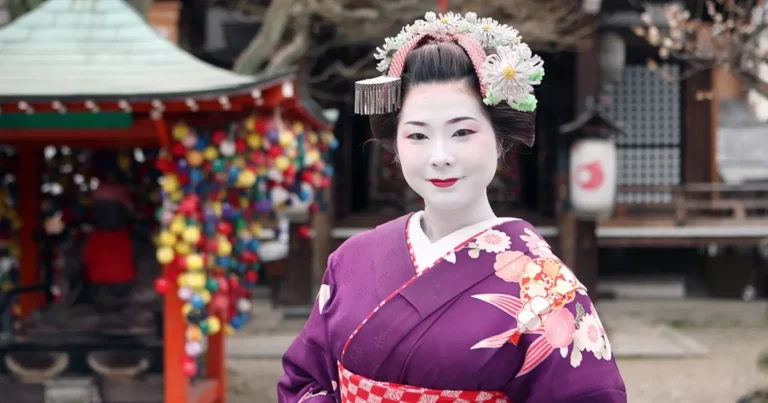
The term “Japanese geisha” refers to highly skilled entertainers who specialise in traditional Japanese arts. These women dedicate themselves to a pool of talents, including Japanese dances, singing, poetry, and even flower arranging. They are called in by wealthy clients, such as businessmen and politicians alike, to perform at high-end, private parties and special events.
The Characteristics of Japanese Geisha
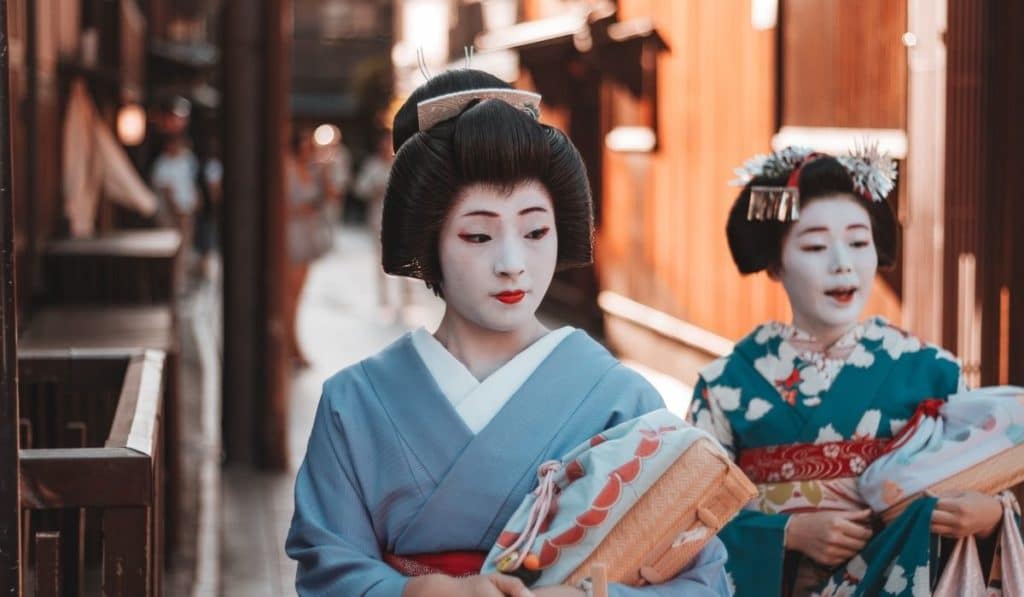
Geishas are situated throughout Japan, but they mostly parade around the streets of Kyoto. Both locals and tourists identify them by their iconic white makeup, red lipstick, and done-up hair. They are usually spotted wearing silky kimonos and holding a prop, such as an umbrella or a paper fan.
The Misconception of Geisha
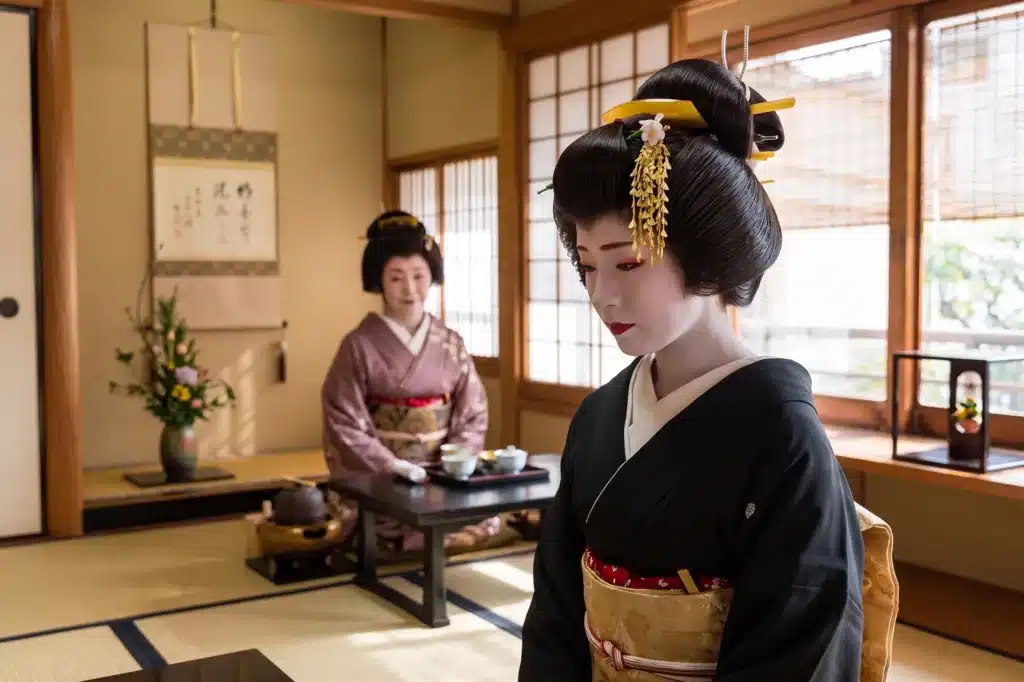
A common misconception classifies geishas as prostitutes. But they are far from that. Though prostitution was legal during the Edo period in Japan, geishas have always established themselves as professional entertainers. Back then, prostitution required proper licenses that geishas were strictly forbidden to hold.
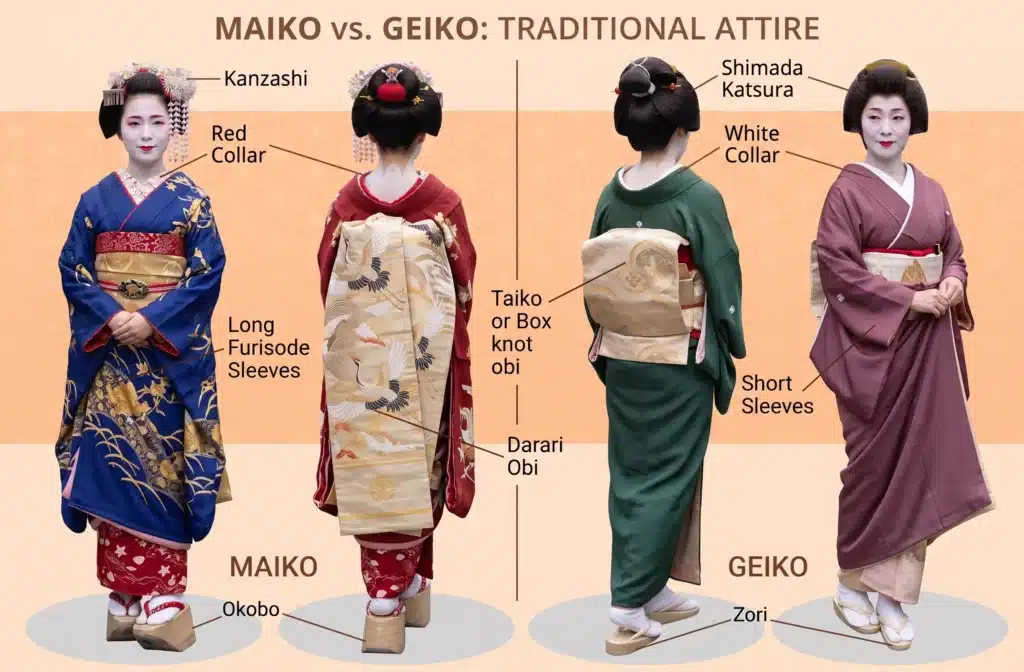
Differences Between Japanese Geisha (or Geiko) and Maiko
Japanese Geisha: The Makeover
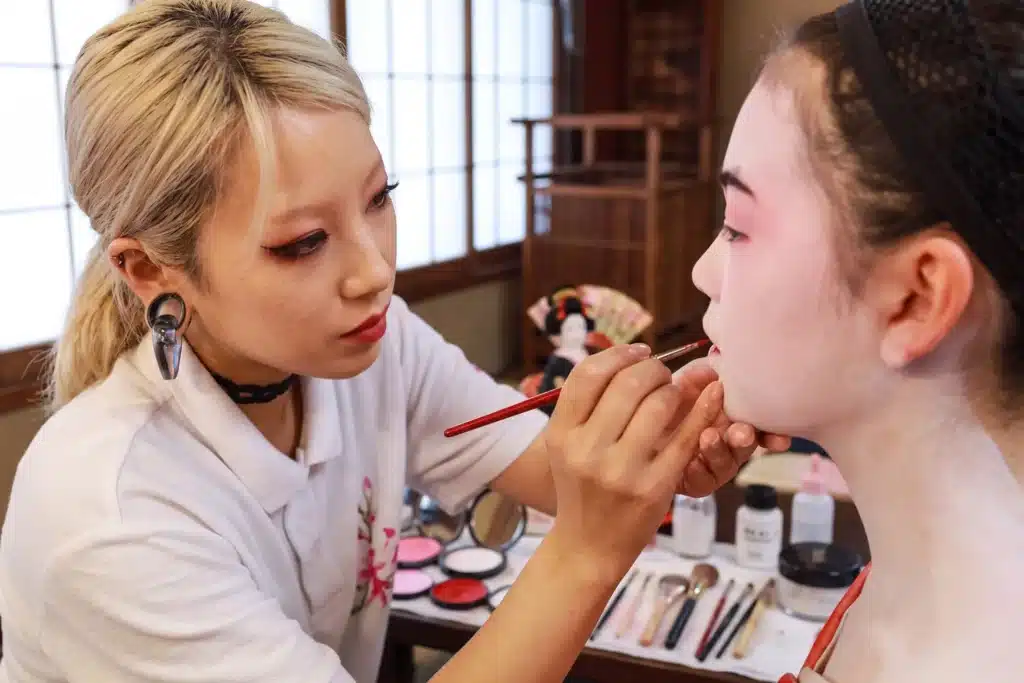
For curious tourists who want to step into the shoes of a geisha, you can! Several places in Kyoto offer geisha and maiko transformation services. These places do your makeup and dress you in the full geisha kimono. If you wish, you can even take photos with your costume at some of Kyoto’s scenic spots. Here are the steps you need to know during the makeover.
Step 1: Shironuri
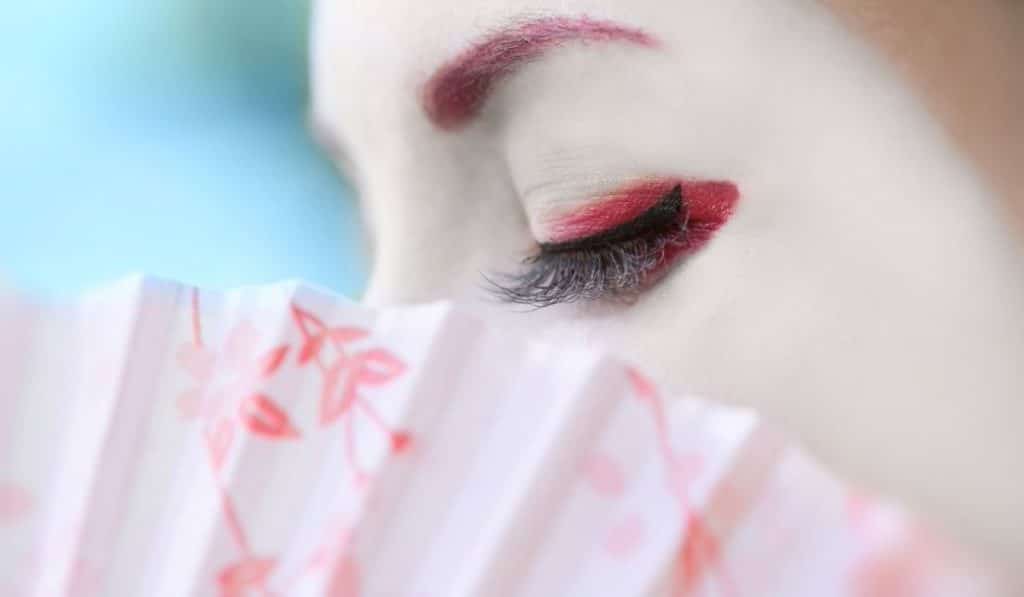
The makeover kicks off with a base makeup called shironuri. This is the white base you see on geishas. Your makeup artist will apply oil to the face before painting on shironuri to the face and neck. Then, the powder is applied to the face for an even coverage and a matte finish. This step is tedious, so it takes patience to apply the shironuri carefully.
Step 2: Geisha Makeup
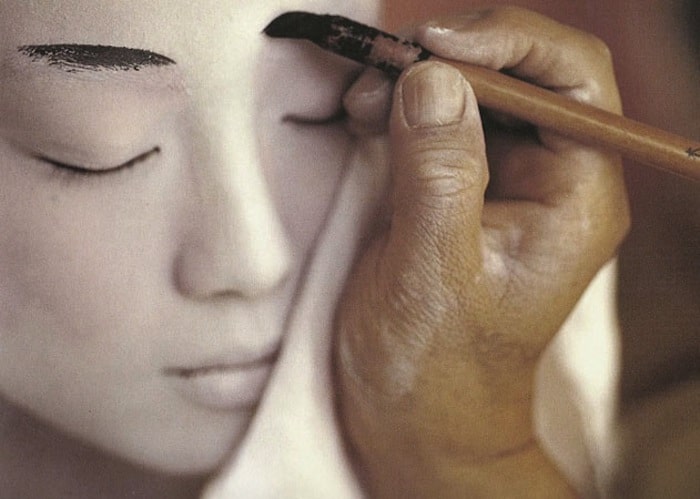
Step 3: Geisha Hair
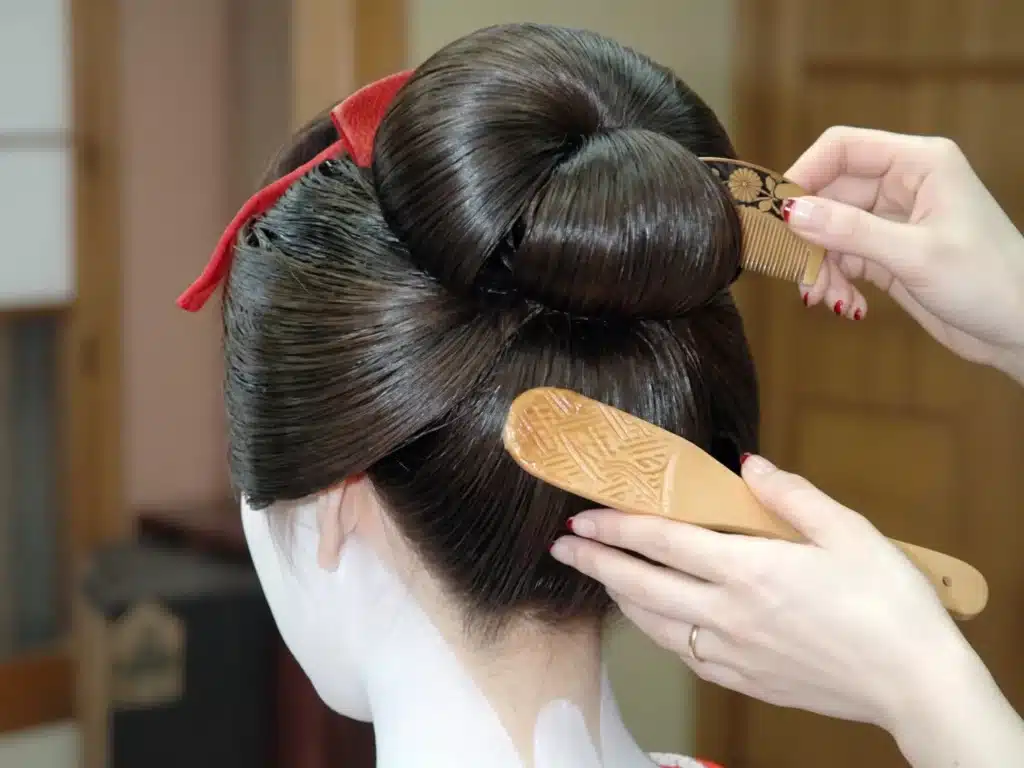
Afterwards, you can choose to wear either a half wig, a Han-katsura, or a full-head wig. The Han-katsura wig blends with the hair better for a more natural-looking hairline. The half wig comes only in black to match the authentic geisha wig, but those who do not have dark-coloured hair can opt for the full-head wig.
You can also choose alternatives like black hairspray or request a hair colour retouch after the photoshoot. However, if you choose to roam Kyoto after the makeover, you will need to use black hairspray to appear as a real geisha.
Step 4: Geisha Kimono

Step 5: Kanzashi Hair Ornament
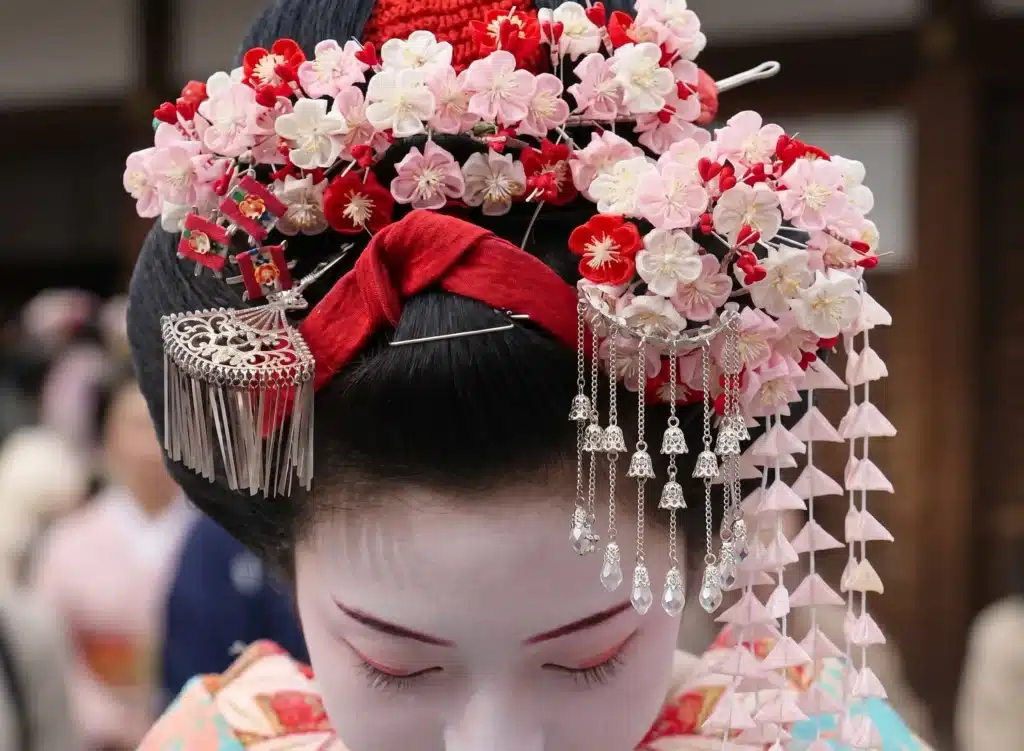
Step 6: Photoshoot and Tips

At this stage, you are all set for a photoshoot! However, not all geisha transformation services offer this. But when they do, let the photographers guide you. They will explain the proper rules and mannerisms of a geisha before the photo-taking session commences.
Posing for your first photo can be exciting, but avoid smiling with your teeth, as rouge can stain your pearly whites. Besides that, there might be prop adjustments during the photoshoot, so just relax and let the photographers direct you.
You can also venture out into the streets as a geisha! Other tourists and locals might just stop by and snap a photo with you.
Step 7: Unwind With a Geisha Facial
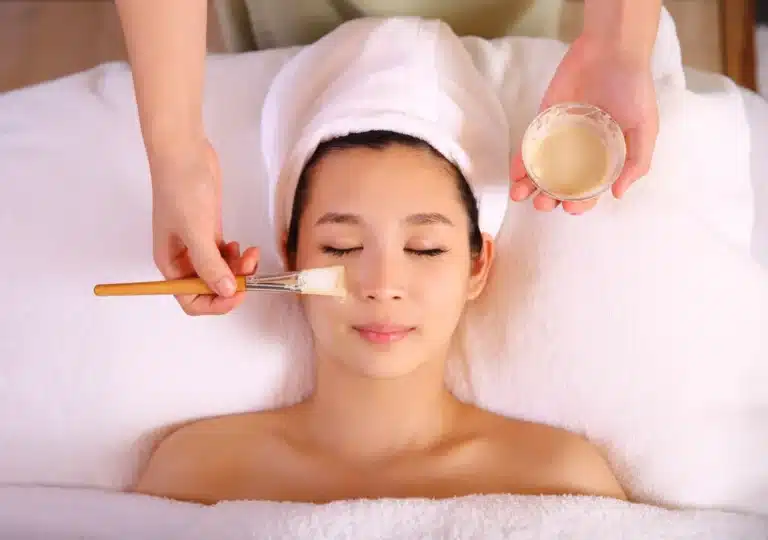
If you are not travelling to Japan for a geisha makeover anytime soon, why not try the Geisha Organic Facial? At Ikeda Spa, this facial uses organic Japanese ingredients such as rice bran, Azuki red beans, and, most crucially, uguisu no fun, or powdered nightingale droppings.
These droppings were a beauty secret widely used among the geishas. Their traditional white makeup used to contain zinc and lead, which contributed to serious skin irritation. Uguisu no fun was discovered to completely remove the toxic makeup while soothing the skin.
Although there are no harmful ingredients found in geisha makeup today, uguisu no fun remains a Japanese beauty secret. These nightingale droppings are safe on the skin, as they are sanitised through exposure to ultraviolet light before being milled into a fine powder.
For those who are iffy about uguisu no fun, you can still enjoy your treatment droppings-free! The Maiko Organic Facial offers the same organic goodness as the traditional Japanese ingredients, but without a trace of nightingale droppings. Train yourself to get comfortable with this facial before you take on the real Geisha Organic Facial.