

We’ve all heard the saying, “Having a tattoo means you cannot enter an onsen in Japan.” But is this true? It’s time to uncover the truth about tattoos and their acceptance in Japanese onsens.
The good news is that there are onsen across Japan where tattooed visitors can enjoy the baths without hiding their body art. Some accept visible tattoos of any size, while others provide bathing garments or private bathing options.
This guide covers 10 tattoo-friendly onsen in Japan, including their current tattoo policies, admission prices, opening hours, locations and important rules.
Policies, prices and opening hours may change. Always check directly with the facility shortly before travelling, particularly when making a long journey.
Table of Contents
Are Tattoos Allowed in Japanese Onsen?
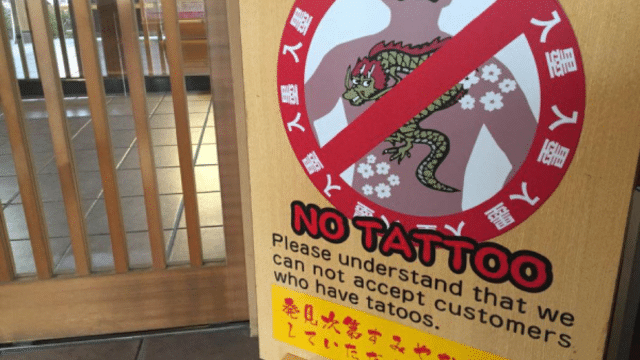
There is no single nationwide law banning tattoos from Japanese onsen. Instead, individual bathhouses, ryokans and hotels decide their own rules.
Many onsen and ryokans introduced tattoo restrictions because tattoos became associated with organised crime in Japan. These rules apply to all tattoos, even small decorative, cultural and religious tattoos.
However, attitudes are changing. Some onsen that receive international visitors now accept visible tattoos. Others allow guests to enter after applying tattoo stickers to smaller tattoos.
In addition to these communal baths, there are private baths, or kashikiri-buro, available for individuals with tattoos. However, just because a bath is private does not guarantee entry for individuals with tattoos. Usually, the overall tattoo policy applies to the entire property.
1. Dōgo Onsen Honkan, Ehime
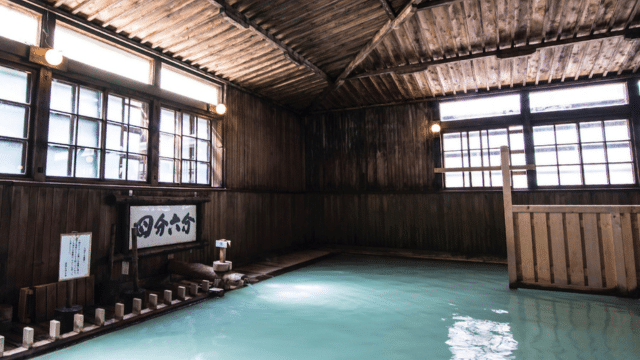
For travellers seeking a historic tattoo-friendly onsen, Dōgo Onsen offers around 3,000 years of bathing culture in one of Japan’s most significant hot-spring destinations.
Its most recognisable bathhouse is Dōgo Onsen Honkan, a multi-storey wooden building in Matsuyama. The building is designated as an Important Cultural Property of Japan.
A major conservation project was completed in December 2024, and the entire building has now reopened to visitors.
Tattoo policy
Tattooed visitors are allowed to use the public baths at Dōgo Onsen Honkan. There is no requirement to cover visible tattoos.
Other major public bathhouses in the Dōgo area, including Tsubakinoyu and Asukanoyu, also accept visitors with tattoos.
Why visit Dōgo Onsen?
Visitors to the Dōgo Onsen can enjoy the traditional Japanese experience of the public bathhouse and appreciate the historic and wooden architecture of the building.
There are various admission courses available. The most basic admission includes the ground-floor bath of Kami-no-Yu. Other, higher-priced courses include access to the second-floor rest areas, tea, and the Tama-no-Yu bath.
Practical information
Location: Dōgoyunomachi, Matsuyama, Ehime Prefecture
Kami-no-Yu, ground floor
- Opening hours: 6.00 am to 11.00 pm
- Final admission: 10.30 pm
- Adult admission: ¥700
- Child admission: ¥350
- Time limit: 60 minutes
Kami-no-Yu, second-floor course
- Opening hours: 6.00 am to 10.00 pm
- Final admission: 9.00 pm
- Adult admission: ¥1,300
- Child admission: ¥650
Tama-no-Yu, second-floor course
- Opening hours: 6.00 am to 10.00 pm
- Final admission: 9.00 pm
- Adult admission: ¥2,000
- Child admission: ¥1,000
Dōgo Onsen can become busy during weekends and public holidays. Visit early in the morning or later in the evening for a quieter experience.
2. Kinosaki Onsen, Hyōgo
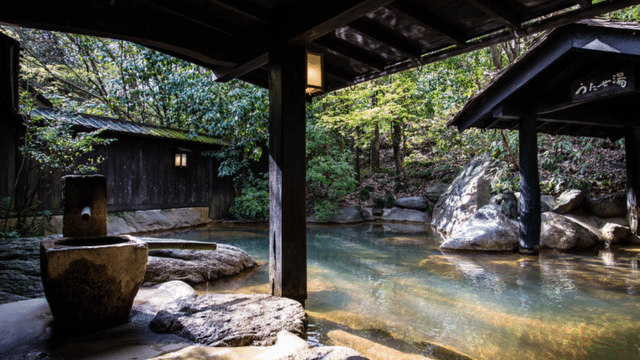
Kinosaki Onsen is among the most straightforward destinations for travellers searching for tattoo-friendly onsen in Japan.
Kinosaki Onsen is not simply a single bathhouse, but a traditional onsen town that boasts seven public bathhouses.
The compact town is easy to explore on foot, making it a convenient, tattoo-friendly onsen destination for first-time visitors to Japan.
Tattoo policy
All seven public bathhouses in Kinosaki Onsen accept tattoos of every shape and size. Cover-up stickers are not required.
Individual ryokan and hotel baths may have their own tattoo policies, so check with your accommodation before using its private facilities.
Why visit Kinosaki Onsen?
Each of the seven public bathhouses within Kinosaki boasts its own design and atmosphere.
Many feature outdoor baths, cave-like interiors, and views of gardens.
Those who are not staying overnight at any of the ryokans within Kinosaki can purchase a Yumepa day pass that grants access to each of the public bathhouses that are operating that day.
Important 2026 update
Satono-Yu has been closed indefinitely since 1 April 2024.
Kono-Yu will be closed from 11 May to 30 October 2026 for renovations.
The other five public bathhouses within the town will remain open, but their operating days may vary.
It is best to check the bathhouses’ official calendar before travelling to Kinosaki Onsen.
Practical information
Location: Kinosaki, Toyooka, Hyōgo Prefecture
Yumepa day pass
- Adults: ¥1,500
- Children of middle-school age and younger: ¥750
- Children under three: Free
Most public baths operate either from approximately 7.00 am to 11.00 pm or from 3.00 pm to 11.00 pm. Each bathhouse has a different closing day.
Kinosaki Onsen is approximately two and a half hours from Kyoto or Osaka by limited express train.
3. Shibaseki Onsen, Ōita
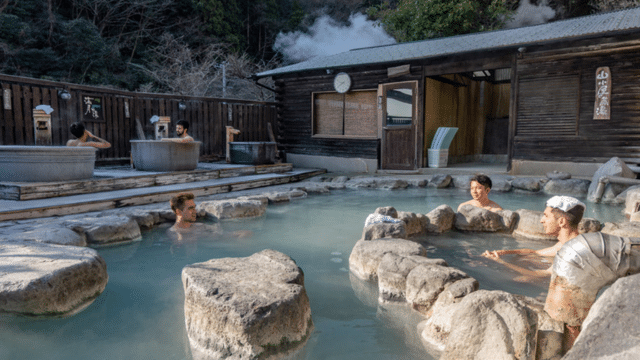
Shibaseki Onsen is an affordable municipal tattoo-friendly onsen in Beppu, one of Japan’s most famous hot-spring cities.
The bathhouse has a long history. Legend says that Emperor Daigo bathed in the region in the year 895, and Emperor Go-Reizei visited the baths in 1044.
The onsen offers regular and outdoor baths, a steam bath, and family baths that can be reserved.
Tattoo policy
Visitors with tattoos are permitted to enter Shibaseki Onsen. There is no requirement for tattooed individuals to cover their tattoos.
Since this is a municipal onsen, visitors should observe the traditional etiquette of local public baths and be mindful of the residents who use the facilities regularly.
Why visit Shibaseki Onsen?
Shibaseki Onsen has an exceptionally low entrance fee, making it an affordable option for travellers who wish to experience a traditional municipal onsen.
The steam bath is one of the features of Shibaseki Onsen. Additionally, there are family baths available for visitors who prefer to bathe in a more private setting.
Practical information
Address: Noda 4 Gumi, Beppu, Ōita 874-0016
Regular bath
- Opening hours: 7.00 am to 8.00 pm
- Adult admission: ¥300
- Child admission: ¥100
- Preschool children: Free
Family bath
- Opening hours: 9.00 am to 8.00 pm
- Final reception: 7.00 pm
- Price: ¥2,000 per hour for up to four people
The baths close for cleaning between 1.00 pm and 2.00 pm.
Shibaseki Onsen is normally closed on the second Wednesday of each month. When that date falls on a public holiday, the closure may move to the following day.
4. Otakinoyu, Gunma
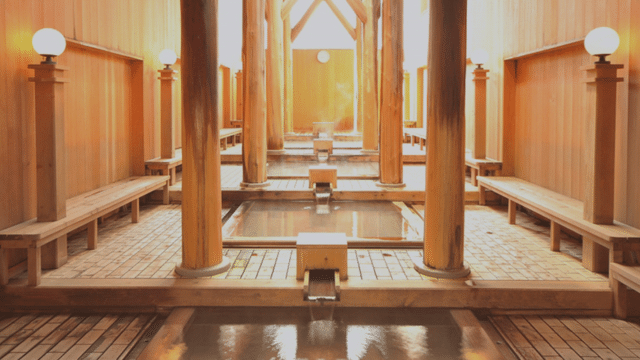
Otakinoyu is a tattoo-friendly onsen in Kusatsu, one of Japan’s best-known hot-spring towns.
Kusatsu is famed for its naturally hot and acidic spring waters. This onsen offers a variety of bathing options, including indoor baths, an outdoor bath, a sauna, and the distinctive awase-yu bathing experience.
Tattoo policy
Otakinoyu allows people with tattoos to enter the baths, and their tattoos will remain visible while they are inside the communal baths. However, visitors should check the latest tattoo policies before their visit, as some other facilities in Kusatsu may have different policies regarding tattoos.
Why visit Otakinoyu?
The main reason to visit Otakinoyu is for the awase-yu bathing bath. This bath involves entering a series of baths of increasing temperature. The first bath is around 38°C, while the last bath can reach 46°C. By moving through these baths, your body becomes accustomed to the increasingly hot water rather than immediately entering the hottest bath.
Due to the extreme heat of the last bath, it may not be suitable for all bathers. Enter the bath slowly, and if you begin to feel dizzy or uncomfortable, exit the bath immediately.
Practical information
Address: 596-13 Kusatsu, Kusatsu Town, Gunma 377-1711
- Opening hours: 9.00 am to 9.00 pm
- Final admission: 8.00 pm
- Adults: ¥1,200
- Children aged three to 12: ¥600
Otakinoyu is within walking distance of the centre of Kusatsu Onsen. The town can be reached by bus from Naganohara-Kusatsuguchi Station.
5. Yamato-no-Yu, Chiba
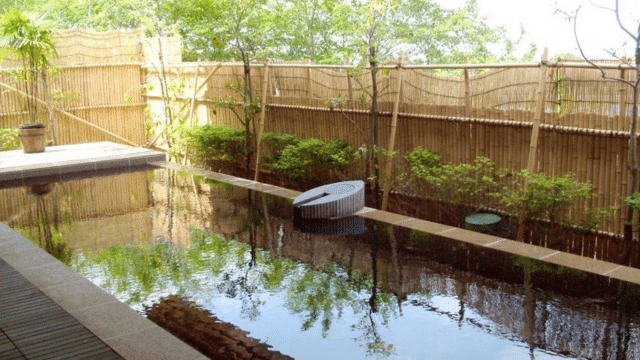
Yamato-no-Yu is a peaceful countryside tattoo-friendly onsen in Narita City, Chiba Prefecture.
The facility has indoor and outdoor baths that overlook the area’s natural, rural scenery. It is situated in a location that makes it a good choice for travellers who are arriving at or departing from Narita International Airport.
Tattoo policy
According to the official information published by the facility, Yamato-no-Yu allows individuals with tattoos to enter. Visitors with visible tattoos do not have to cover these tattoos in order to enter.
However, children below the age of six are not permitted to enter the facility. This means that while the facility is not an adults-only establishment, children aged six and above are allowed to visit Yamato-no-Yu.
Why visit Yamato-no-Yu?
Yamato-no-Yu offers a quieter experience compared to the busy hot springs that are located near central Tokyo.
The facility features communal baths, dining facilities, and private rooms with baths. These private rooms are ideal for couples, families, or individuals who wish to experience the hot springs in a more private setting.
Practical information
Address: 1630 Ohtake, Narita, Chiba 286-0841
- Opening hours: 10.00 am to 10.00 pm
- Weekday adult admission: ¥1,000
- Weekend and public-holiday adult admission: ¥1,100
- Children aged six to 12: ¥600
- Children under six: Not admitted
Yamato-no-Yu is approximately 40 minutes from Narita Airport, depending on traffic and the chosen route.
6. Hottarakashi Onsen, Yamanashi
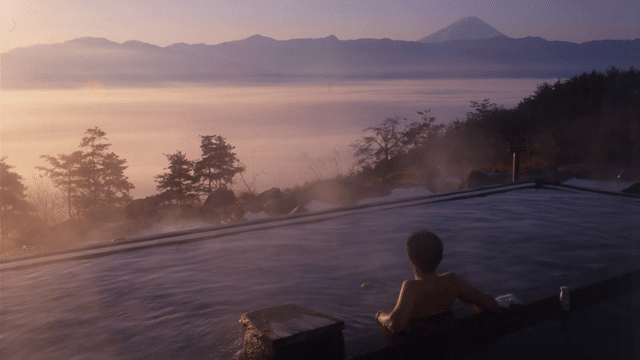
Hottarakashi Onsen is a scenic tattoo-friendly onsen overlooking the Kōfu Basin, with views of Mount Fuji possible on clear days.
Because of its hillside location, Hottarakashi Onsen is especially popular at sunrise, sunset, and after dark, when the lights of the city can be seen across the valley.
Tattoo policy
According to the official Hottarakashi Onsen website, tattooed guests are welcome to use the baths. There is no need to cover tattoos.
The baths are divided by gender, and there are no private baths available.
Why visit Hottarakashi Onsen?
The onsen has two main bathing areas: Acchi-no-Yu and Kocchi-no-Yu. Both offer views of the surrounding area, though the opening times for each may vary.
Hottarakashi Onsen opens approximately one hour before sunrise. It is not one hour before sunset. This allows visitors to experience the sunrise while bathing in the onsen.
While many hope to see Mount Fuji from Hottarakashi Onsen, the views depend on the weather. Clouds, mist, and seasonal weather can block the view of the mountain.
Practical information
Address: 1669-18 Yatsubo, Yamanashi City, Yamanashi 405-0036
- Opening time: Approximately one hour before sunrise
- Closing time: 10.00 pm
- Final admission: 9.30 pm
- Adults: ¥900
- Children up to primary-school age: ¥400
The onsen is approximately 10 minutes by taxi from Yamanashi-shi Station. The official website estimates a one-way taxi fare of approximately ¥2,400.
7. Hoheikyo Onsen, Hokkaido
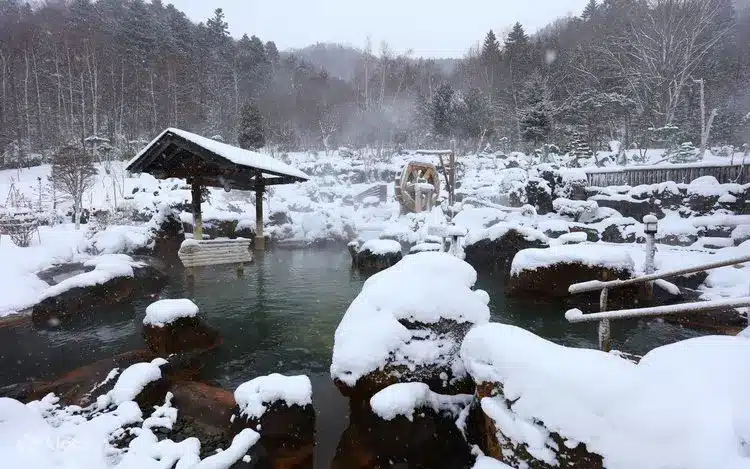
Hoheikyo Onsen is a mountain-based tattoo-friendly onsen that can be visited as a day trip from Sapporo.
It boasts spacious outdoor baths surrounded by natural beauty and water that flows freely from the springs. During the winter months, visitors can enjoy bathing in the snow-covered outdoors.
In addition to its baths, the facility is also famed for its delicious Indian curry.
Tattoo policy
Hoheikyo Onsen currently permits guests with visible tattoos to enter without covering their inks.
However, the official operating page does not share details regarding a tattoo policy. Guests should contact the facility directly to confirm before visiting with extensive tattoos.
Why visit Hoheikyo Onsen?
For those staying in Sapporo, Hoheikyo Onsen is a great location to visit for its natural outdoor baths and as a day trip outside of the city.
Since it is a day-use facility, it does not offer accommodations or family baths.
Practical information
Address: 608-2 Jozankei, Minami-ku, Sapporo, Hokkaido
- Opening hours: 10.00 am to 10.30 pm
- Final admission: 9.45 pm
- Adults: ¥1,300
- Children: ¥600
Public transport is available from central Sapporo towards Jozankei, followed by a local connection to the onsen. Check the latest bus timetable before travelling.
8. Takaragawa Onsen Osenkaku, Gunma
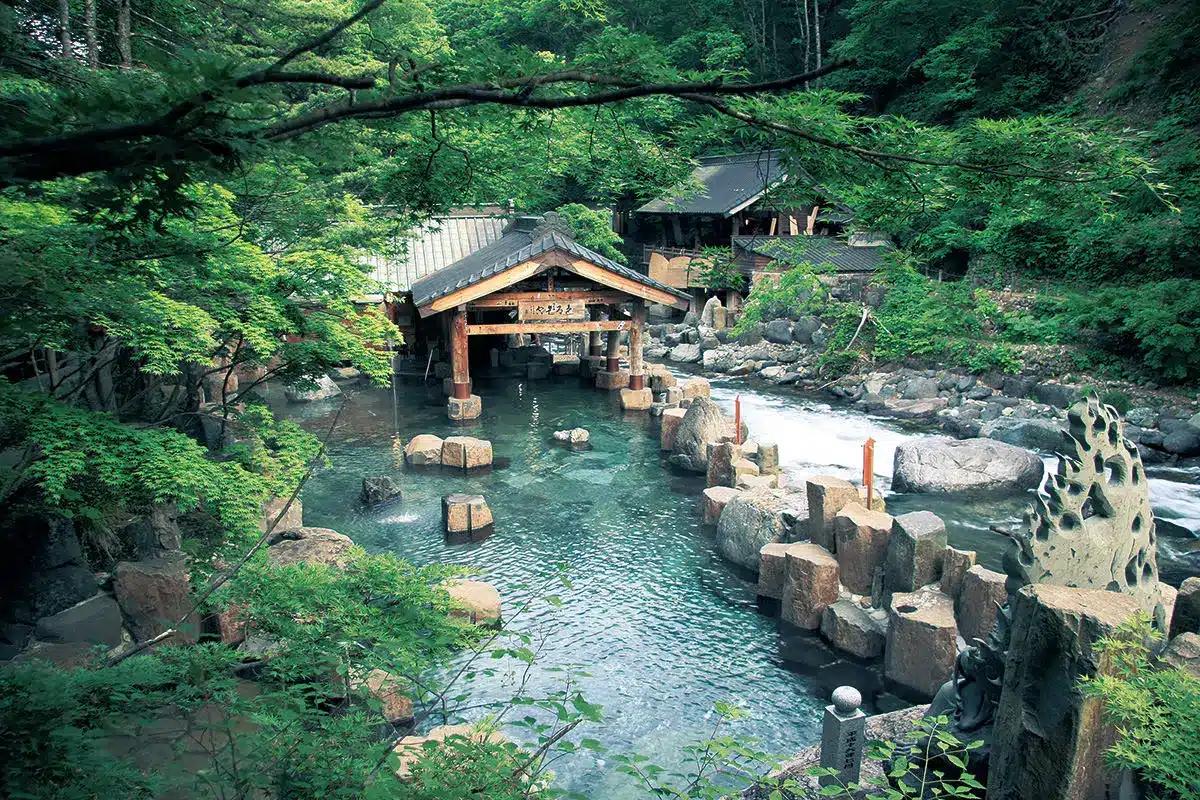
Takaragawa Onsen Osenkaku is a riverside tattoo-friendly onsen known for its extensive open-air bathing area beside the Takara River.
The baths are surrounded by forest and mountains, and visitors can enjoy different scenery in each season. They may experience snow during the winter months, fresh greenery during the spring, and colourful autumn foliage during the fall.
Tattoo policy
Tattooed guests are generally allowed to use the outdoor bathing area of Takaragawa Onsen.
All guests are required to wear the bathing garment that is provided by the establishment. Guests are not allowed to bring their own bathing garment or swimwear.
The bathing garments that are provided cover most of the body. However, those with extensive tattoos are encouraged to check the bathing policy before making a booking or travelling to the establishment.
Why visit Takaragawa Onsen?
Takaragawa Onsen features four outdoor baths that are located beside the river. The area of these baths is approximately 470 tatami mats.
Most of the baths are mixed-gender. However, one of the outdoor baths is designated for women only.
The use of bathing garments allows for travellers who may feel uncomfortable bathing nude to visit the mixed-gender onsen comfortably.
Practical information
Address: 1899 Fujiwara, Minakami, Gunma 379-1721
Day-use bathing
- Opening hours: 10.00 am to 4.30 pm
- Final reception: 4.00 pm
- Recommended arrival: By 3.00 pm
- Adults: ¥1,500
- Primary-school children: ¥1,000
- Preschool children: Free
- Maximum visit: Four hours
The admission price includes the required bathing garment.
Temporary closures occur occasionally, so check the operating calendar before making the journey.
9. Saki-no-Yu, Wakayama
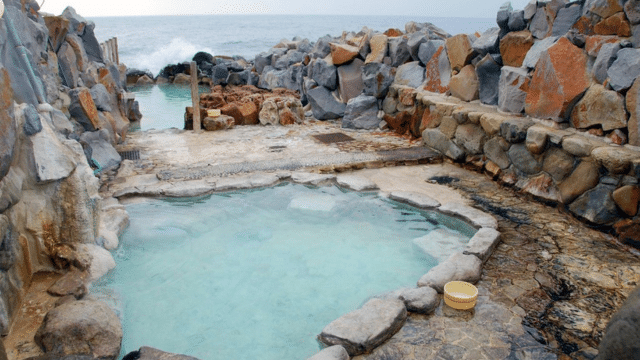
Saki-no-Yu is a historic coastal tattoo-friendly onsen in Shirahama, Wakayama Prefecture.
The bath overlooks the Pacific Ocean. Guests can hear the waves crashing against the rocks, and can even feel the sea spray when the weather is rough.
The bath is one of the oldest in Shirahama and is associated with the area’s bathing history.
Tattoo policy
Visitors with tattoos are allowed to use the bath. There are no requirements for tattooed individuals to cover their tattoos.
As a public bath, space is limited within Saki-no-Yu. Visitors are expected to be respectful of others using the bath.
Why visit Saki-no-Yu?
Most onsen facilities in Japan are not located this close to the sea.
Due to the bath’s proximity to the sea, there are restrictions on what can be used in the bath. Products like shampoo, conditioner, and soap are not allowed in the bathwater because it will flow to the Pacific Ocean.
Guests are encouraged to wash before entering the bath and to rinse themselves with the facilities provided.
Practical information
Address: 1668 Shirahama, Wakayama Prefecture
July and August
- Opening hours: 7.00 am to 7.00 pm
April to June and September
- Opening hours: 8.00 am to 6.00 pm
October to March
- Opening hours: 8.00 am to 5.00 pm
Final admission is 30 minutes before closing.
- Admission for everyone aged three and above: ¥500
- Children under three: Free
From JR Shirahama Station, take a bus to Yuzaki. Saki-no-Yu is approximately five minutes away on foot.
10. Takegawara Onsen, Ōita
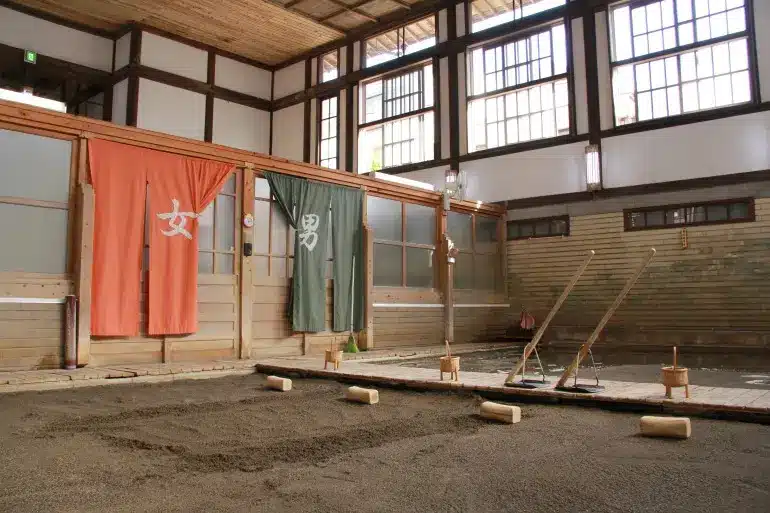
Takegawara Onsen is one of Beppu’s most famous historic bathhouses and an affordable, tattoo-friendly onsen for visitors to the city.
The original bathhouse opened in 1879. The current wooden building was constructed in 1938 and has become a symbol of the city.
Visitors can use the regular hot-spring bath or the sand bath.
Tattoo policy
Tattooed guests are allowed in Takegawara Onsen. Visible tattoos are permitted inside the bathhouse.
Guests are, however, expected to follow the establishment’s bathing etiquette and respect other guests.
Why visit Takegawara Onsen?
The sand bath is an experience that is different from using the regular hot springs.
Guests are given a robe to wear before they lie down in the heated sand. Staff will cover the guest’s body in sand, leaving their head uncovered. The experience is warm and heavy on the guest’s body. Should they start to feel unwell, they should leave the bath promptly.
The regular bath costs less and allows guests to visit the bathhouse without experiencing the sand bath.
Practical information
Location: Motomachi, Beppu, Ōita Prefecture
Regular bath
- Opening hours: 6.30 am to 10.30 pm
- Adults: ¥300
- Children: ¥100
- Preschool children: Free
Sand bath
- Opening hours: 8.00 am to 10.30 pm
- Final admission: 9.30 pm
- Admission: ¥1,500
- Minimum age: Six years old
The sand-bath reception may close early when all available sessions are full.
Takegawara Onsen is normally closed on the third Wednesday of each month. When that date falls on a public holiday, the closure may move to the following day.
Frequently Asked Questions About Tattoo-Friendly Onsen
Why do some Japanese onsen prohibit tattoos?
The main reason for the tattoo restrictions introduced by many onsen is due to the association of tattoos with organised crime in Japan. There is no official tattoo ban in Japan as a whole; rather, each onsen decides its own policy regarding tattoos.
Can foreigners with tattoos enter Japanese onsen?
Nationality does not exempt a person from an onsen’s tattoo policies. Some onsen allow tattoos for both Japanese and foreigners. However, some onsen have a tattoo restriction for all people entering the facility. It is best to check each onsen’s policy individually.
Do I need to cover my tattoo at an onsen?
Some onsen allow tattoos to be visible, while others only allow small tattoos that can be concealed with stickers. And some onsen prohibit tattoos altogether, regardless of whether they are covered.
What size tattoo can be covered?
Each onsen determines the size of tattoos that are allowed to be covered with tattoo stickers. Do not assume that a standard 10 × 15 cm tattoo cover will be permitted at every onsen.
Can I wear swimwear to hide a tattoo?
Most onsen require that guests be nude in the communal baths. Wearing swimwear is prohibited at most onsen. Only wear a bathing garment if the onsen provides or allows one.
Are private onsen tattoo-friendly?
Private onsen are often the easiest for people with tattoos to access. However, some hotels and ryokan with private onsen have the same tattoo policy throughout the establishment. It is best to confirm with the hotel when reserving a private onsen.
Are Japanese sento more accepting of tattoos?
Many sento allow tattoos because they are for local neighbourhood residents. However, not all sento will allow tattoos. It is best to inquire about the tattoo policy before using a sento.
What happens if an onsen refuses entry?
If an onsen refuses entry due to your tattoos, it is best to follow the onsen’s staff instructions and leave the facility. Whether or not you will receive a refund varies by onsen. It is best to inquire about their tattoo policy before entering and paying to use the onsen.
Which Japanese onsen town is best for tattooed travellers?
Kinosaki Onsen is the best option for tattooed travellers, as all seven of its public bathhouses allow tattoos of all sizes. Beppu is also a good option, with tattoo-friendly public onsen such as Shibaseki Onsen and Takegawara Onsen.
Can people with extensive tattoos use an onsen?
Yes, but only at onsen that allow tattoos to be visible and have no size restrictions. All of the public onsen in Kinosaki allow tattoos of all sizes. For other onsen, it is best to inquire before travelling to the facility.
Which Tattoo-Friendly Onsen Should You Choose?
Choose Kinosaki Onsen for the easiest multi-bath experience and a traditional onsen-town atmosphere.
Choose Hottarakashi Onsen for sunrise views and the chance of seeing Mount Fuji.
Choose Saki-no-Yu for a distinctive outdoor bath directly beside the Pacific Ocean.
Choose Dōgo Onsen Honkan for history, architecture and cultural significance.
Choose Takaragawa Onsen for large riverside baths and a mixed-gender bathing experience using designated garments.
Choose Shibaseki Onsen or Takegawara Onsen for an affordable local bath in Beppu.
What If You Cannot Find a Tattoo-Friendly Onsen Nearby?
While tattoo-friendly onsen are becoming increasingly common in Japan, the options may still be limited in smaller towns or near your accommodation.
Before giving up on the experience of bathing in a hot spring, consider these alternatives.
1. Contact the Onsen and Ask in Japanese
Some onsen do not publish their tattoo policies online. Others may allow small tattoos, allow approved tattoo cover-up stickers, or have a private bath that allows those with tattoos to use the onsen.
Before travelling to the onsen, contact them and ask about their policies.
May I use the onsen if I have a tattoo?
タトゥーがあるのですが、温泉を利用できますか?
Tatū ga aru no desu ga, onsen o riyō dekimasu ka?
May I enter if I cover my tattoo with a sticker?
タトゥーをカバーシールで隠せば、利用できますか?
Tatū o kabā shīru de kakuseba, riyō dekimasu ka?
Do you have a private bath?
貸切風呂はありますか?
Kashikiri-buro wa arimasu ka?
If you are not confident in the Japanese pronunciation of the above questions, simply show them to the receptionist.
2. Ask Whether Tattoo Cover-Up Stickers Are Allowed
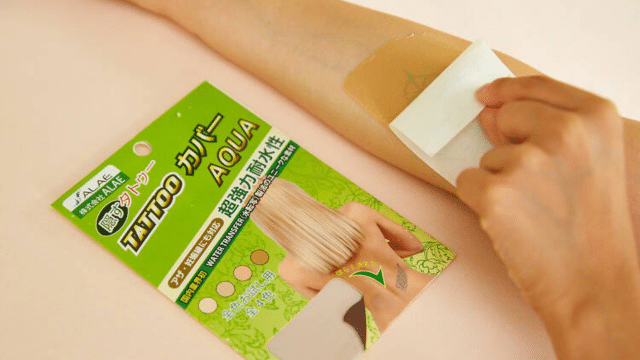
Some onsen allow those with small tattoos to enter, provided that the tattoo is completely covered with waterproof tattoo cover-up stickers.
Again, there is no standard policy regarding the size, number, or type of stickers that are permitted. Some onsen provide the tattoo covers, others require you to purchase and bring them with you.
Do not assume that covering a tattoo will allow you to enter the onsen. Always ask first.
3. Visit a Local Sento Instead
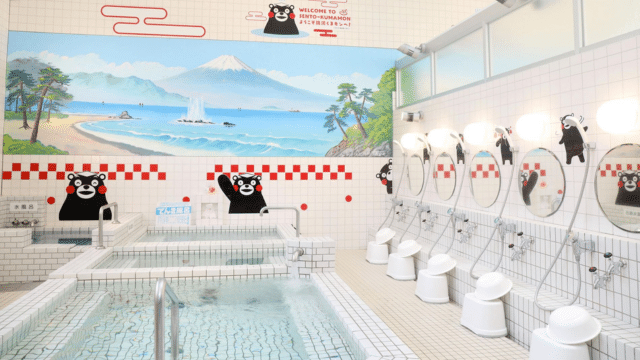
A sento is a public bathhouse in Japan that uses heated tap water instead of hot springs.
Many sento are more accepting of those with tattoos because they are primarily used by local residents who do not have baths in their homes.
Many sento are significantly cheaper than onsen.
Tattoo policies still vary from sento to sento, so inquire before entering.
4. Book a Private Onsen Bath
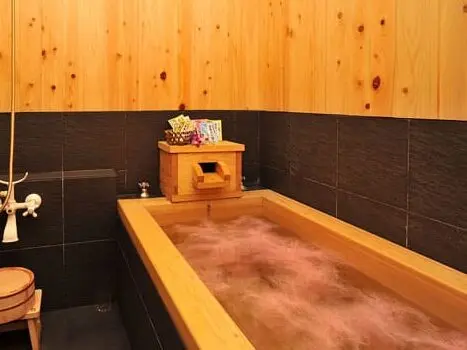
A private bath in an onsen is known as a kashikiri-buro or kazoku-buro.
Such baths are used by a single person, couple, or family. You will not have to worry about others in the bath feeling uncomfortable around your tattoos.
Ryokan often include these baths in their rooms or allow for reservations of these rooms.
Again, some private baths still have tattoo policies. Ensure tattooed guests are allowed before booking one of these private baths.
Prefer a Private Japanese Bathing Experience in Singapore?
There is no need to travel to Japan to experience a Japanese bathing ritual.
At Ikeda Spa, you can reserve a private couple Hinoki Onsen Bath made from Japanese cypress. The tub was crafted in Japan and delivered to Singapore as a complete structure.
The private setting allows you to relax without the constraints of communal bathing rules or onsen etiquette.
Click the banner below to discover how to enjoy a complimentary onsen bath with us!