

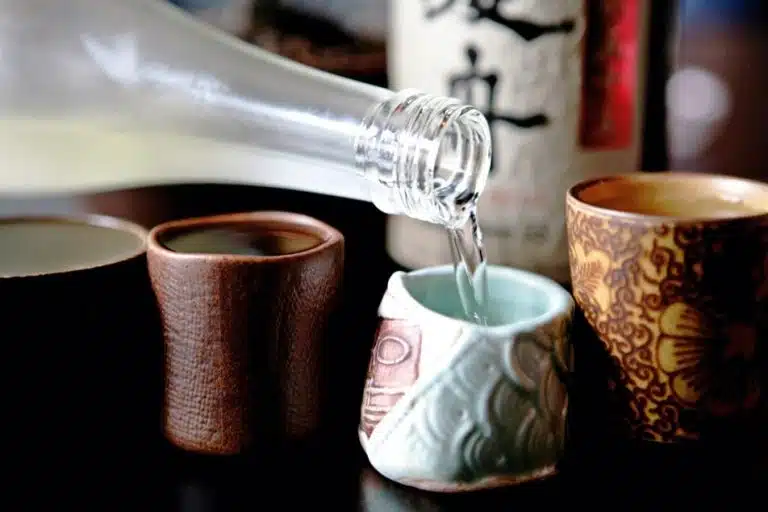
Sake (sah-kee 酒), the Japanese rice wine, has been around for years. It complements all kinds of food, especially traditional Japanese cuisine, which is why sushi sake pairing is such an interesting part of the dining experience. As a famous and recognisable drink, sake is loved not only in Japan but also internationally. However, sake is not just a drink.
Let’s all be honest here. You recognise Sake as a drink. But do you know about the Japanese Sake Bath? Read on as we reveal the five unexpected benefits of the Bath and how you can DIY your Sake Bath!
Why Is Sake Best Made During Autumn?

During Autumn, rice is freshly produced. Sake is made with the freshest batch of steam-cooked rice, making it one of Japan’s best seasonal products. With other ingredients such as clean water, kōji mould, and yeast added, the mixture is left to ferment under precise conditions. For 21 days during the fermentation period, the yeast in the mixture retains its strength to produce the alcohol in Sake while consuming sugar.
However, to control the sake’s taste by preventing yeast from operating in its ideal environment, the temperature of the fermentation tanks is carefully controlled using cooling jackets. Therefore, instead of 28°C, the temperature is reduced to 8-18°C.
Although Sake uses the freshest batch of rice, it is left to age for six months to brew out the best flavour. A final step is to add pure water to reduce the alcohol content from 20% to 16%, while ensuring consistency.
Health and Beauty Benefits: Sake Is More Than A Drink
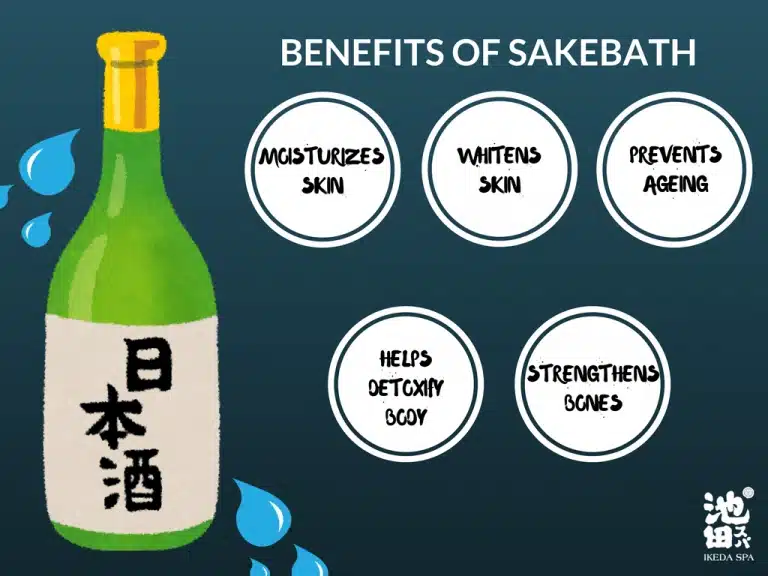
Alcoholic beverages are commonly linked to damaging our bodies. However, did you know that adding Sake to a bath creates a Sake bath that offers enormous benefits for both your health and your skin? Here are the 5 shocking Sake Bath benefits!
Moisturise Skin
In the traditional drink, there are humectant components such as glycerol, glycerine and amino acids. These help retain the skin’s moisture from evaporating. Optimising skin health, Sake not only retains skin moisture but also strengthens it with intense hydration.
Whiten Skin
Kojic acid is present in Sake, which is a standard component in many whitening skincare products. As an alternative to hydroquinone, this chelating agent helps exfoliate sebum, dirt, and other impurities. Preventing their accumulation helps you to avoid skin stains.
Prevent Ageing
Containing ferulic acid, they have powerful UV-absorbing properties that provide an anti-ageing effect. They protect the skin from ageing by preventing wrinkles, sun spots, age spots and freckles.
Help Detoxify Body
Soaking in a Sake bath raises your body temperature, triggering perspiration through increased circulation and heart rate. As you perspire, your body detoxes by reducing heavy metals and metabolic imbalances. This leads to better digestion and lower weight gain.
Strengthen Bone
Found in Sake are amino acids. Strengthening weak bones, skeletal muscles recover and rebuild. Diseases avoided are Osteoporosis and other related bone diseases. Other than that, soaking in the bath helps to relieve joint pains and aches.
DIY Sake Bath Recipe
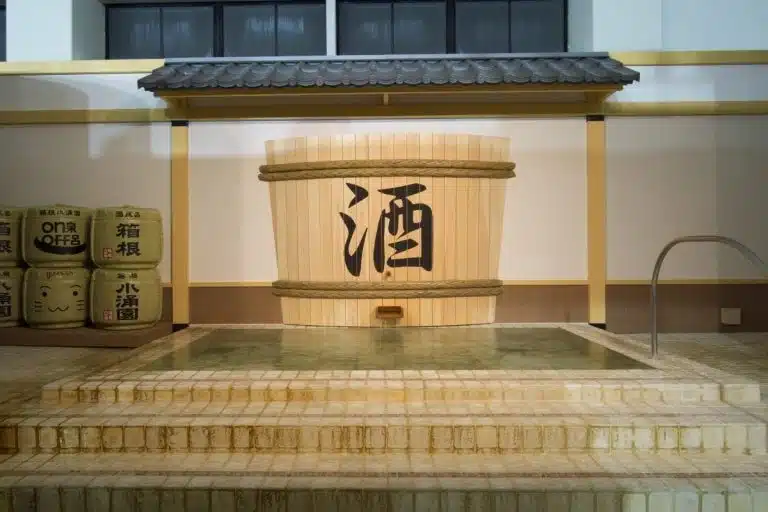
Fancy a soak in the Japanese Sake Bath? You can make it at home and enjoy a warm bath yourself!
Here is what you need to prepare a Sake Bath:
- Bathtub filled with warm to hot water
- 24 ounces of Sake (around 700ml)
The amount of Sake you pour into your bath is your choice. You can pour a cup or even the entire bottle if you want to. However, do take note that you may get drunk from the evaporated Sake. Hence, it is important to try half a cup or one cup of Sake first before adding more.
As easy as ABC, all you have to do is add Sake to the hot bath and give it a gentle stir! Rather than pouring any Sake, pick your favourite Sake to enhance the scent. Before entering the hot bath, do remember to test the temperature to prevent burning your skin.
Spend Your Autumn in Ikeda Spa’s Sake Onsen Bath
Too lazy to create your Sake Bath? Or too lazy to prepare a Sake Bath at home to avoid making a mess?
Don’t worry, this Autumn, Ikeda Spa is featuring our Sake Onsen Bath! With three different packages in our Autumn Staple series, get an essence of Japanese Sake goodness to pamper your body and mind!